Englewood: How Fear Turned into Agency, Agency Led to RAGE, and RAGE Sparked Joy
Asiaha Butler is the Co-Founder & CEO of the Resident Association of Greater Englewood. She is a Community Strategist, Real Estate Developer, Innovator, and Change Agent. I first learned about Asiaha through her leadership at Weave: The Socail Fabric Project by The Aspen Institute.
Asiaha's family had been in Englewood (Chicago) for generations. And facing a season of fear and frustration, she was ready to leave. But she caught a vision she couldn't let go of. So she turned her fear into R.A.G.E, and for almost 20 years has been innovatively, tirelessly, and joyfully sparking neighborhood-level belonging and collective action.
Listen in as we talk about connecting youth with community elders, about convincing the city to allow residents to purchase and own vacant land in their neighborhood, about catalyzing a movement of residents into a formal association that is reshaping the neighborhood, and about what it means to co-create the future together.
Listen and learn from one of the best leaders of people-centered, place-based change.
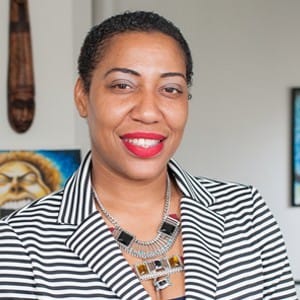
Asiaha Butler is a long time resident of Englewood and Co-Founder and CEO of the Resident Association of Greater Englewood (R.A.G.E.), in Chicago. R.A.G.E. offers education, youth development, economic development, and civic empowerment to uplift, inspire, and change perceptions of her neighborhood. As an Aspen Fellow, she has spoken at the Aspen Ideas Festival, as well as the Illinois Black Legislative Caucus, and her work has been featured in over 100 local and national news stories including Chicago’s NBC 5 and WTTW and recently in the HBO Documentary, South to Black Power. She has been a keynote speaker at conferences like the Community Leadership Institute of NeighborWorks, and she leads and facilitates workshops which have included the Reclaiming Vacant Properties of Center for Community Progress.
People Mentioned
David Brooks — New York Times columnist and author who founded Weave: The Social Fabric Project at the Aspen Institute in 2018; Asiaha references him personally interviewing early Weavers, including her. https://weavers.org/
Organizations Mentioned
Resident Association of Greater Englewood (R.A.G.E.) — Resident-led and resident-funded association Asiaha co-founded around 2010, covering all six wards of Greater Englewood; works across education, youth development, economic development, and civic empowerment. https://www.rageenglewood.org/
Weave: The Social Fabric Project — Aspen Institute initiative founded by David Brooks in 2018 to connect, support, and invest in local "weavers" rebuilding social trust and connection in their communities. Asiaha is a featured Weaver. https://weavers.org/
Shawn: Aisha, thank you so much for joining the conversation today. I'm so looking forward to talking to you and just getting more people listening to your amazing story.
Asiaha: Thank you. Thank you. I'm excited to be here today.
Shawn: We're definitely going to talk about the way that you and your work have been shaping the neighborhood of Inglewood, but I actually want to start with — I mean, that's your neighborhood, it's where you grew up. So how has Inglewood shaped you as a person?
Asiaha: Wow, it's probably the reason I coined my name Mrs. Inglewood. I always joke that I'm married to this community. I've been a part of this my whole life. This is where my parents met — a lot of people know Inglewood as it used to be one of the biggest retail districts, on 60th and Garden something. That's where my parents met, and my grandparents were here, my great-grandmother was here. Inglewood is what I know. I met my husband here, I had my baby here, I bought my home here. I'm pretty proud of being Mrs. Inglewood and loving everything about my community — it's home to me, that's where I'm rooted, what I grew up in.
I didn't know it was shaping me to do the work I do today, but it definitely did. My grandfather was an entrepreneur. My great-grandmother, I learned later from my family, was one of the first people to start a block club on her block, and then my grandmother followed those same steps. Far and close, I think it's just a part of me and our community — it makes sense that I'm doing what I'm doing today with the Resident Association of Greater Englewood.
Shawn: I love that. But there was a moment where you were like, "hey, this is just too much" — you almost came to my place, almost came to Atlanta — but there was a moment where you said, "no, this is it, I'm staying." What made you want to leave, and then what made you stay?
Asiaha: The divorce — that's what I like to call it. As I mentioned, my family is from here. My husband and I met here, became homeowners about 22 years ago, and decided to purchase our first home here in Inglewood. We really thought we'd done good — the block seemed quiet, at least when we visited. But soon after, we found out that wasn't the case. It was "the avenue" — everybody knew it was the party block. Sometimes those parties, those gatherings, turned deadly. There were shootings probably at least once a week. There was a time someone climbed through my daughter's window, and we got a call from ADT and ran back trying to take care of whatever happened, and our neighbors just sat there and watched. I was scared, I'll be honest — as a young mom, trying to have my first home, that American dream, and feeling like a prisoner in my own home.
At that moment — I'm a problem solver, so I felt like this was a problem — the way I thought at the time to resolve it was to migrate with my family, who had all moved to Georgia: my great-grandma, my grandmother, my uncles, my father, my cousins. I felt like maybe I could start over there, live without fear, be supported. That didn't happen, obviously, but that was the plan. It was difficult navigating trying to live in peace — honestly, just absolutely fearful, scared. Bullets went through our house before. A lot of turmoil for a lot of years.
Shawn: And what was the pivot for you to say, "I'm not headed to Georgia, I'm staying put in Inglewood"? Because this isn't a minor inconvenience — this is about safety and wellbeing.
Asiaha: That's one thing that had pissed me off to the point I was ready to go. But as we were contemplating the move, making arrangements — I swear to God, one morning I'm up, having my coffee, looking out the window, and I see the kids of the neighbors who normally partied all through the night, playing in the dirt, throwing rocks, throwing glass. And I guess the spirit hit me that day: you can't leave. That's the easy way out. If you just leave, these young people — who have no control over the situation, innocent in this world, who just want to play — get left behind. I looked at this beautiful little girl in a dress, playing in dirt, and told my husband, we have to do something. Let's try to do something on our block. Let's engage with these young people, do some things productive, do fun things. Let me break away from the fear I have about connecting with my neighbors, take the time to connect with them and their children, and let them know: I'm a homeowner, I have some stake here.
I felt like I had the courage to connect with the neighbors, and that courage helped us do more activities on the block, bridge those connections, and start trusting each other again. That turned into good relationships — we still have some issues, but we work through them. And it made me want to do even more — if I could do that on my block, could I do something even more in the community? That's what led me on this journey.
Shawn: You've talked about shifting from fear to agency — and the fear was very legitimate, very real. How did you make that journey? Maybe it wasn't a switch flipped all at once, maybe it was more of a slow dial.
Asiaha: It was a slow dial. It was really me wrestling with my own mind — thinking about my own power. I'd always kind of been fearless my whole life, so why was I living in this place of fear? I think honestly it was these small things that chipped away at it: "Hello." "How are you doing?" "Excuse me, could you not sit on my car" — these small moments of hellos and connections and waving. At first it was just us passing each other, acting like enemies even though we were next-door neighbors. It was almost like a flag: we're here, you're here, let's try to make this work. Me approaching it from "I have some agency here, this is my block too, what could we do to resolve this together?"
I modeled certain behaviors. I didn't always say things, but we'd clean up on the block, or we'd see a neighbor coming with groceries and grab the kids to help carry them. Those small touch points helped break away the fear and gave me the agency, and the confirmation, I needed to sustain it.
Shawn: I think it's encouraging that when you look at where you all are 15 years in, and the amazing things you've accomplished, it started with a "hello" — "hi, I'm Asiaha." It's a reminder to take the step you can take.
Asiaha: I don't know — yeah. It was almost like I was invisible, and I wanted to say, you know what, I'm not going to be invisible. Hello, I'm here, I'm present. We're human, we all want safety, we want these kids safe on this block — that's what we have in common. What do we need to do? I'm also a landlord, so I wanted my tenants to feel safe too. Really trying to bridge this village together — all of us want a safe block. We'd seen death happen in front of us, and that's not our desire. So I kept building on that.
Shawn: So tell me how you went from that pivotal moment — seeing the young girl, saying "I can't go, I want more for her, for me, for this neighborhood" — leaning in with small steps of hello and introducing yourself, to forming RAGE and getting that group activated in the neighborhood.
Asiaha: It wasn't a straight line at all — it was a beautiful journey. Initially I was just a resident homeowner, working downtown, not really civically involved. So I did what was hot back then: I went on volunteers.org, this matching site. I thought, I've done these things on my block, I want to do more, I'm pretty sure I can use skills from my corporate world to help somehow. I volunteered with any organization that would have me, observed a lot of people, met a lot of brilliant people, and was eventually asked to sit at some urban planning and development tables. At the same time, through volunteering, I noticed a couple of problems I felt I had to resolve — just two, at the time, because there are a lot of problems, so I only went after the ones I thought I could actually resolve.
One problem was a disconnect between our elders and our young people — even though our elders were running youth-led programming, you could tell there was a gap. I tried to bridge that through a project called Docs and Dialogue: putting elders in rooms with young people and neighbors, going door to door, finding documentaries that would spark conversation and community-building, breaking down the fears I had too. I used that vehicle to do this film project, and at the same time, going to those planning meetings, I noticed residents coming to my film project saying, "I live in the community too, I'd like to be more involved — how can I be?" So a few more folks like me, chipping away at fear, wanting to give back — I told them, there's some other spaces we need to go. This is nice, this is beautiful, we love it on Saturdays, but they're talking about changing dynamics in our community, and our voices need to be heard. So I invited those residents to some of those tables. We were sharp and people noticed — "who are they?"
Eventually, from that group, I said, you know what, I think we need our own thing. At first it was literally called the Undefined Movement — we didn't know what to call it, so we just said it's undefined and it's a movement. Then, from my association background, I said, if all of us want to see this community grow, want to change this narrative, take back our blocks, take back our land — let's get organized as an association. That's how RAGE developed. It wasn't a straight line — it was diving in, volunteering, learning the landscape of the community, seeing a gap I could fill in a fun way, and then taking the interest of residents to other spaces where their voices could also be valued and heard.
Shawn: You didn't launch the Asiaha Butler Foundation — you launched a resident association. It really is about creating a coalition that puts residents' voices at the center of what happens in the neighborhood. I hear a lot in my field about "resident voice, seat at the table" — and I don't think people are being disingenuous, but not every effort to center resident voice looks the same. When you say putting residents' voices at the center, what does that mean in practice?
Asiaha: You're right — everybody has that community-engagement checkbox where residents get brought to the table after the planning's already been done in the lab. For us, resident engagement means being in the lab together — planning together, co-creating together, even when there are deliverables for whatever project. What's the actual pulse of the residents — do they even want this?
There've been so many situations where we've been called to the table about ideas people thought would be great for our community. One was a brewery — this was ten or twelve years ago, when breweries weren't as popular as they are now. Our members were like, we never said we wanted that — where did that come from? We do want an event space, but where did the brewery idea come from? Some of those things got blocked, because they weren't co-created with residents in the lab, and they didn't last. But there are examples where it did work — where government planning groups here in Chicago actually got in the lab with RAGE and helped create a policy that became citywide, to solve the issue of vacant lots in our community.
I'm in Chicago, one of the most segregated cities in the country, similar to Boston — I live in a redlined community, I work through the after-effects of redlining, and one of those effects is vacant properties. Almost every single block in Inglewood has them — similar to where I saw that little girl playing in the dirt. These used to be homes, structures, people's livelihoods, neighbors. Even my block went from a full block to being almost secluded because so much got knocked down. In 2014, the city was trying to think through what to do with this abundance of vacant lots, and a lot of our members were already stewarding those lots — taking care of them, planning gatherings on them. So we co-created the Large Lot Program, which let homeowners buy up to city-owned lots for a dollar and fill those spaces with whatever they wanted. That's a good example of the city listening, leaning into our recommendations, and it becoming policy citywide. Residents can lead the way.
Shawn: There's a difference between gathering input after a decision's already been made — like the color of a building you had no say in — versus actual co-creation. And it feels like there's a world where people work at the policy, community-development, systems-change level, and a world where people work at the grassroots, connecting neighbors, organizing. Sometimes those feel like different worlds — different language, different assumptions, different meeting styles — even when both want the same thing. How have you bridged those worlds to work together on something like the vacant-lots policy?
Asiaha: Not easy — it hasn't been easy. Over about 18 years of this work, I've noticed that for some reason, what a community wants and needs, coming from their own voice, is just not highly valued. I think us coming in as young as we were back in 2010, with RAGE, sitting, observing, taking notes, asking pointed questions — "what does this mean to the average person" — noticing when we're talking over people's heads with zoning language or whatever, and saying we need to break this down into layman's terms, not as a protest but as, we need to go deeper to understand what we really want — that approach helped.
There were critical times when decisions were being made — RAGE was doing participatory grant-writing with foundations, foundations that weren't from Chicago partnering with us to ask, how do we disperse this money, who's doing the work around food security. You have this trusted, neighborhood-based voice that's actually in the zip code being served — you almost can't ignore it. Now, 15 years later, I'm grateful that if you don't have a member of RAGE, or someone from our residents, at the table, you really don't enter Inglewood in that way. We've protested, we've stopped projects, we've won some and lost some — but at the end of the day, we showed people we were subject-matter experts. I used to tell all our members: you guys are the subject-matter experts. You know if your block needs a new house, a pocket park, a gathering space. Any time you're resolving something in a community that's been harmed, approach it from a healing space — leaning in, listening, co-creating, establishing relationships.
Shawn: That makes me think of a quote — I'll have to check who said it — something like, change done to someone is violence, but change done with someone is liberation. It might be the exact same change — a park improvement plan, a street-cleanup plan — but doing it to, above, or for someone carries a kind of violence even with good intentions, while doing it with someone can be liberating. And RAGE is now in a position to grant permission, in a sense — a lot of that "community engagement" language is really about permission flowing the other direction, like "we're granting you permission to pick the playground color" instead of "this is our neighborhood, and we grant you permission to be here." That's a shift that takes a lot of work to get to.
Asiaha: Yeah, it took a while — and there are still individuals at larger institutions who don't value resident voice, so we're always a little bit in that battle. But typically, when someone's working in greater Inglewood, almost the first question anyone asks is, "have you talked to RAGE?" Your project sounds cool, but have you met with Asiaha Butler, with the members of RAGE? Because we can probably guide you, let you know who you might want to connect with. One of our models is connect, build, then take action. We're intentional about asking: have you taken the time to truly connect? That means you don't even share what you're doing yet — you connect, you learn people, you listen. Then, how are you building relationships with the residents you're trying to serve? That's the part people get impatient about — they just want the deliverable, the action. Time and time again, we've seen people skip connect and build and just jump to action, and that doesn't work.
Shawn: I want to think about "connect, then build, then take action" — especially since the kinds of neighborhoods you and I both work in tend to attract problem-solvers who just want to fix things. I first became aware of you through your connection to Weave, the Social Fabric Project. Could you say a word about what Weave is, and why the social-fabric piece — connecting and weaving people together in relationship, not just solving problems — is so important?
Asiaha: A lot of what you hear me talk about is straight from lived experience. My lived experience was: to do anything on my block, I first needed to connect, needed to build that relationship before taking any action — and that took years. Because of some of that work, I became an Aspen Fellow, and got connected to the formation of the Weave network — this was when David Brooks first started interviewing people, fascinated by individuals who truly take the time to build social fabric.
For me, being in a community that's been extremely harmed, with nothing but tangible reminders of systemic racism, the social fabric — people's hearts, passions, what they love, the culture of the community — mattered far more than, say, taking over a vacant house, which we do now, 15 years later. People felt like I did — fearful, not wanting to talk to neighbors, feeling like they were in a hopeless community, under a cloud. Connecting with them authentically, celebrating and learning what they love first, finding opportunities in our community for people to do what they love, and building this relationship, this family, among people who feel isolated — and our community is isolated, with over 5,000 vacant properties — having this portal of connection for our neighbors through RAGE has been one of the most remarkable parts of this work. I couldn't even fully explain it. Weave amplifies those connections people have that you sometimes can't see, but that are so important to whatever nonprofit or business you're running — the social fabric is the key point. I've heard so many beautiful stories through Weave — people doing concerts in their alleys, moms doing simple things that are needed in America right now, in this sense of isolation: having a "weaver" on the block to bring back that hello, that connection, so people don't feel isolated doing this kind of work — and you get inspired by other people's stories too. In a world that's so go-go-go, so AI, AI, it takes things back to a human level, which I think we miss in this fast-paced digital world. What's the human level happening across the world, and how do we share that?
Shawn: I think if people look in from the outside at RAGE, they'll see the projects, the problems solved, the advocacy — and we should celebrate that, the neighborhood deserves to have those problems addressed. But what are some of the practices RAGE does that operate at that purely human level — just making sure neighbors know and trust each other, and that outside people who want to do good can know and trust you too?
Asiaha: Space is everything, and gatherings are everything to us. This week we have our Inglewood Village meeting, a civic meeting open to the public — that's more where we talk about issues, co-create, listen, and take that back to the lab. Then we have members-only meetings that are more sociable. When RAGE started, we were in bars — people wanted to get off work, unwind, and we noticed that in a relaxed setting with some food, people let their guards down. So we lean into that. We do something called Porch Life in Inglewood — porches are a cultural thing here, where people hang out, chill. We started a Porch Life Tour: really simple, but people love it — members say "come to my porch, come to my porch." We show up with music, food, our programmatic stuff, but we're really just talking to neighbors, walking, talking — "who are you guys?" "I've got a tent." We share about RAGE, but we also want to learn about them, their history on the block, how they're connected to our members. It's simple, but it's something people already enjoy — they love their porches — and RAGE comes up with phenomenal ideas on the porch.
We meet people where they are — very personal, block by block. We don't ask people to come to a meeting, we're right there on their block, and we talk to our members on that block beforehand. Those simple human things are what connect people, and it's contagious. We're well over 500 official members, but over time we've had thousands of people involved. At one point, Chicago has fifty wards, our community only touches five of them, but we had a member in every single one of the forty-five wards. People are fascinated by our approach — they know that when they come to our meetings, public or social, they're going to be heard. We just had a members-only meeting at a member's bar — she said, come have your meeting here. We did, and right after, another member had a retirement party there, so now she's connected to that business and celebrating there too. We see that over and over — people feel so connected to this network, whether they're doing the work or not, because they know they have people and neighbors in their community who understand what they're going through and are there to help.
Shawn: As I hear you talk about "connect, build, then take action," it's not connecting so you can build so you can take action, as if action is the only real point and the rest is just a means to get there — the connecting is the magic of the whole thing.
Asiaha: Exactly right. What if we clean up a park and make a new one — well, what's the purpose of the park? So we can connect, so we can be together. The connection is ongoing, the building is ongoing — if action happens, great, but if it doesn't, the connection and the relationships are what we're most thankful for. I gained a whole huge family in my community, bigger than when my mom and dad were here. I feel deeply rooted to my community now. It feels like a neighborhood — I can walk out and wave to the police, the mail carrier, go to a local store and people know me, they're neighborly. I didn't feel that before RAGE, and I'm so glad I feel it now.
Shawn: I'm curious about the move from "Undefined Movement" to formalizing as RAGE — what was the conversation like landing on that acronym? Were people hesitant, or did everyone say, yes, this is it?
Asiaha: It's funny — it goes back to lived experience again. I was working at a property management association, and they lived in acronyms, everything had one. So I knew we needed a good acronym that represented who we are and our whole community — Inglewood and West Englewood together are "Greater Inglewood," and we wanted to keep "greater" because we're always working toward a greater Inglewood. I played around with names, then showed them RAGE on the screen. Some people, including a couple of founders who are elders, said, "We can't call it that — people will think we're angry and mad." I said, people already think everyone in Inglewood is poor and uneducated — so let's play on your narrative of what you think RAGE is. We're going to be the nicest people you'll meet as the Resident Association of Greater Englewood, yes, with a name like RAGE — but also, it's okay for us to have rage. We're healing from the harm our city has done to our families, our legacy.
We started telling people, we should have rage, we should be outraged, enraged — but at the same time, RAGE can be passion, RAGE can be the latest trend. We had a press release when we first started — I was in my mid-thirties then — and one of our first lines was literally "Inglewood has RAGE." We talked about the definition, and yes, it intimidated some folks — a name like RAGE coming out of Inglewood — but it was also the most memorable name. No matter where we go, people say "RAGE in the building" — that became our hashtag. We even play on it — "build with RAGE." When I explained it and people heard what it meant, the majority, even with a couple of apprehensions, said, I love it, stick with it, it's fire, it's exactly what we need to infuse into this community. So RAGE was born.
Shawn: And I think that when you show up in the room — our meetings are filled with good food from a local restaurant, we're laughing, going to graduation parties, retirement parties, birthday parties — it flips people's script. Yes, you'll meet people who are outraged, but you'll also meet people who are joyful, deeply connected, and if you work with us, you're going to get invited to sit on a porch. Messing with people's expectations of you, or of Inglewood — that's brilliant.
Asiaha: Exactly. We've been told this is the most sophisticated resident or neighborhood association people have ever seen, that we have some of the best-facilitated meetings, where everybody's voice is heard. I learned an approach to facilitation a long time ago to make sure of that. We often compare our meetings to government meetings, where people aren't introduced, aren't able to say who they are, aren't seen or heard. So we make sure to ask: what block are you from, shout it out; how'd you hear about the meeting; and we have "voices from the village" — anything you want to voice, celebrate, or address, we open that up. We've seen meetings where people are just talked at, not engaged in dialogue. From Docs and Dialogue, learning with those elders how to facilitate a room and let everybody be heard, we've kept that same spirit — whether it's a members-only meeting, a public meeting, Porch Life, or a Zoom call block by block. People know the setting is a safe space, that their voices, opinions, and feedback matter. That's how we shape all of our work — listening in real time, all the time, to what folks are feeling and want to do, and then working together to see what action, if any, makes sense.
Shawn: I've heard you mention the phrase "community development of the mind." So much of what you're doing seems to be about changing mindsets. What are some of the mindsets you've had to work to shift, or are still working to shift?
Asiaha: Constantly working to shift. I just got a Google alert — somebody shot and killed in our community. We get those all day; even if it's not actually in our community, it'll get reported as if it were. Community development of the mind, for me, goes back to that lived experience — I was afraid, and I had to shift my own mindset before I could even try to connect with my neighbors. I know from experience that shifting a mindset is more powerful than almost anything. So I started writing about it — I had a blog, still up, Mrs. Inglewood Blogspot — and I wrote about every experience I had, what I saw. People started reading it. I wasn't trying to put down the community with some overly rosy narrative — I wanted to share another truth. Yes, we have violence, criminal activity, vacant lots — that's true. But it's also remarkable: grandmothers here, business owners here, kids graduating, going to prom. Where's that truth?
I took it upon myself to keep writing, and people responded — "why is everyone picking on Inglewood so badly, let's defend it, let's shed light on the beauty here, let's do it together." So we've done campaigns like Inglewood Rising, putting people on billboards, just showing there's love in Inglewood — "I am Inglewood, we love Inglewood." A really simple campaign but hugely impactful — people saw themselves on the billboard: "my God, that's me and my son." Those campaigns are things you can't touch, but they're tangible — that's true community development, before RAGE ever had a physical building. Even now, with the building, the shifting of how people think about this community and its people is a constant. We say we're the counter-narrative to the horrible news that's out there — reverse propaganda, showing the positive propaganda, because we have story after story after story to share. It's unfortunate when we hear anyone lose their life here — fifty outlets will share that. No one's going to share that one of our local high schools, Inglewood STEM, has students with million-dollar scholarships, or that our local college has 94% enrollment. That's not going to be on every media platform. As a neighborhood association, that's our job — to get that information out, to keep celebrating not just institutions, but the people here.
Shawn: I feel so much about narrative framing in all of this. However hard it might be to figure out the capital stack to build affordable housing — no shade on how complicated that is, that's above my pay grade — I think the most durable, difficult thing to shift is the way people think about a place, which then shifts how you partner, how you fund, what you write, what policies you consider, or even whether you agree on what the problem even is.
Asiaha: Right — the investment piece. I was just in an article about the difficulty of funding Black-led groups in our community, and how after George Floyd there was this huge shift — "there are Black-led groups doing dynamic work for over a decade, how do we support them" — but that narrative shifted quickly, and we haven't seen that same level of support since. With us, we'd prefer you connect and build with us first, because if you do, you'll keep investing in the people here — there are so many remarkable, resident-led projects and things happening that you can't ignore.
Shawn: I want to ask one more question. Go back 15, 20 years, to when you were getting started, and speak to the young Asiaha Butlers out there, the young Miss Inglewoods — people in a moment like yours was, feeling the pull to leave but also a calling to stay, feeling like just one person who cares a lot. What's your advice on how to get that journey started?
Asiaha: I always say, start within. Really listen to what you've been called to do. For me, I had absolutely no clue what the journey was going to bring, and that's okay — I always tell people, embrace the unknown. The known was: I had a crazy, violent block, and I was scared. That was the known. The unknown was: I can transform this block, maybe I can do something here. I leaned into that unknown — what could this block really look like if I did something? — and I started something very small: my block, my neighbors.
For anyone frustrated or fearful who wants to do something, chip away at that fear as much as possible. Think about what you can control. I could control saying hello. I could control smiling. I could control doing an activity on my block, being nice to the young people, bringing bubbles. I couldn't control what was happening at that one house, but I could control how I showed up. People can tap into that — what can I control here, and what can I do to uplift, or lend, or offer support to something that's probably already moving, that might just need your touch.
It took a long time for me to land on RAGE — it wasn't something I jumped into immediately. I took my time to learn people. I didn't jump out with RAGE until about two years after I started volunteering, because I really wanted to gain trust, to learn people — I didn't want people thinking, "who's this little corporate girl coming in, working somewhere now, living in the community, trying to do things." I got pushback for being too eager. So I humbled myself, observed a lot, and when I was given permission to share what I thought, or how I could enhance something, that's when I did it. Taking that approach sits better in community spaces — instead of walking in and saying, "so many problems, let's come in and solve them," when you haven't taken the time to know everybody already doing that work.
A lot of times it's very emotional, and I always say, try not to do emotional organizing — even though you're in an emotional state, it can be temporary. You might feel really strongly right now, but it can fizzle out. Really understand how something will benefit and impact so many others first. That's what I lean into: if I do this on my block, and share how I did it on my block, it could impact more blocks, which could impact the entire community, which could impact the city of Chicago, which could impact Illinois — but it has to start somewhere. Folks sometimes jump in wanting to solve statewide issues when what's needed might just be a connection where you live first. Some organizers don't believe in organizing where you live — I absolutely dispute that. That's the best way to organize, because you're not going to do anything that messes with your own livelihood, where you live. It's authentic. It's listening, leaning in, observing, messing up, piloting something and saying, that didn't work, let's try again — being okay with that, knowing it's not going to be perfect. You can really start small. Don't get overwhelmed by the ills of the world, because they will remain — but there's something in you that can make a difference, and it might be something as small as connecting with the neighbors on your block.
Shawn: Aisha, thank you so much for this — not just the conversation for the podcast, but for being a neighbor who loves your neighbor and your neighborhood, and for what you model and embody in our world. We need so much more of that. What you're doing through RAGE is such beautiful work, and I'm thrilled I've gotten to know you and learn from your story. Thank you so much — this has been really wonderful.
Asiaha: Thank you. I appreciate it — this has been a great conversation. I'm always excited to share my journey. It's been a journey, and it's still going. It's beautiful — 15 years. If people want to check us out, they can find us at rageenglewood.org. We have another celebration coming up around a building we did — a $7 million construction project we're celebrating on June 15th. We've been doing all of our activities on the 15th of the month, to remind us of 15 years. We're excited, we're continuing to build, and we keep the same approach regardless of whether we're in the development world or not — it's still about the people, the passion, and the power we build together.