Flint, Binghamton, and Jacksonville: Why Asking More, Not Less, Is the Key to Activating and Sustaining Resident Participation
In the last episode, we got a beautiful introduction to place attachment and the global Placemaking movement. In this episode, we follow up with a conversation with a veteran practitioner and national thought leader about her on-the-ground stories — of both success and struggle — in activating people for place-based change. Kady Yellow is the VP of Placemaking for the City of Jacksonville, FL. Her leadership and approach to centering resident voice, vision, and agency is truly exceptional. See how her approach of asking more, not less, has catalyzed local leadership for local impact.
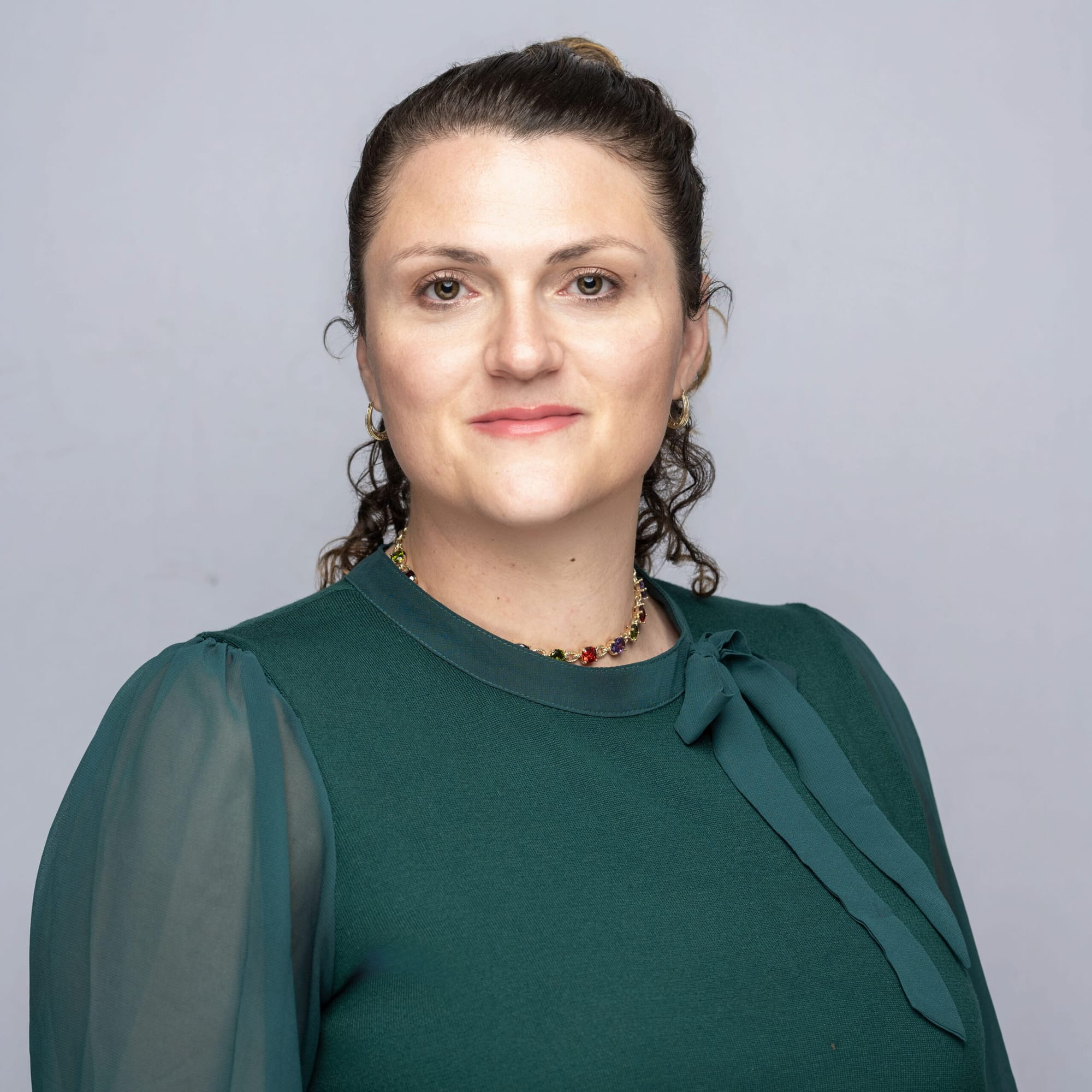
Kady Yellow has been activating public spaces since 2010, when she first discovered the power of collaboration among governments, communities, and the cultural sector to create vibrant, people-centered cities. She holds dual Bachelor’s degrees in Mathematics and Design from Binghamton University (BU).
Born and raised in Binghamton, NY, Kady overcame early adversity to become the city’s youngest Commissioner for Downtown Development and co-founder of the Department of Public Art. As a mayoral appointee to the Public Art Advisory Board, she helped bring the global mural movement to Broome County, leading to the creation of iDistrict Murals & Mosaics, a formal economic development zone. She also led the city’s $1 million Bloomberg Public Art Challenge grant under Mayor Rich David and later helped establish its first Director of Placemaking position.
In 2016, her work earned her an invitation to keynote the Global Mural Conference and a residency at Alaska’s Bunnell Street Arts Center, where she launched Peonies on Pioneer—Homer’s first creative placemaking initiative celebrating the town’s peony industry and Main Street culture. While in Alaska, she also trained government staff and arts administrators for the City of Anchorage on artist collaboration in public space design.
Kady went on to earn her Master’s in Arts Administration from the University of New Orleans (2018), supported by a full Teaching Assistantship. She completed fieldwork in Western Ireland, worked with the Galway International Arts Festival ahead of its European Capital of Culture 2020 designation, and joined the organizing team for the Lisbon Street Art and Urban Creativity International Conference in Portugal.
After publishing her first book on creative placemaking in 2019, Kady became the first Director of Placemaking for Flint, Michigan, where she developed the nationally recognized Pop-Up Civics model to engage residents in urban planning. Her work has since been replicated in Raleigh, Pittsburgh, Akron, Austin, Long Beach, and other U.S. cities. In 2022, she hosted Placemaking Week Michigan, bringing together leaders from Project for Public Spaces, the Brookings Institution, and PlacemakingUS alongside 25 top practitioners.
Her work has been supported by the American Planning Association, American Institute of Architects, Carriage Town Historic Association, and Flint Public Art Project. She is an NEA Creative Placemaking grantee, an international keynote speaker for RAUM (Netherlands), and producer of the global event series Placemaking Week.
Since January 2022, Kady has served as Vice President of Placemaking for Jacksonville’s Business Improvement District, where she empowers residents to reclaim public spaces and engage in civic life. She also teaches with the International Downtown Association and Project for Public Spaces.
Shawn: Nice, nice. Well, thank you for being a part of this conversation. Obviously this podcast is really about the way people are coming together to shape their places. But I actually want to start by asking you about a place that has shaped you and been part of setting your life trajectory.
Kady: Yeah, I really appreciate that question. I've been so fortunate to have so many places be a part of me and me be interacting with its social fabric. I did part of my graduate studies in Western Ireland, and that was a really significant multi-year experience. But I can't help but, when I was ruminating on this question, think about home — what home means as someone who has struggled with that word, and struggled with other people through that word, and had really incredible conversations around the feeling or the place that is home.
Typically we think of where we're born or where the heart is. So for this question I'm going to focus on Binghamton, New York. It's a small city in upstate New York, post-industrial Rust Belt, if you will. When I was growing up there, there were probably 40,000 to 45,000 people in the city, and it was just shy of 50% below the poverty line, which at that time was 15 grand a year. That's changed a lot since. It was a blue-collar town — called the Parlor City. At one point there were more bars than people; that's what the lore says. It's known for its hot air balloon and the "spiedie," which is like a chicken kebab.
It shaped me simply because that's where I was born, raised, and educated. Those streets are the reason I'm interested in public space — those were the first parks and riverfront plazas I activated. What's really humbling about growing up in a small town is that if you're ambitious or have a big spirit, there's lots of room to grow and play and try things out — whereas if I'd grown up in New York City, I might not have been as fortunate, because I could have been overwhelmed or intimidated. Binghamton shaped me because it was my first stage, poetically and literally, where we started putting musicians and guitarists and muralists out in public space. I just loved seeing how incredibly transformative it was.
It's also the place where the term "placemaking" came into my life. I was taking a graduate-level civic entrepreneurship class — where you see the city as your laboratory, civics and people as the problem to solve for — and a professor handed me Richard Florida's *The Creative Class*. Or it might have been *Who's Your City?*, I forget which. He talked about the simplicity of painting crosswalks green and the psychology of color, and I had so badly wanted to save my hometown and save the sadness of the people in it — and save myself. From one sentence in that book, I thought, I need to paint everything colorful so people are happier. The rest is history. Binghamton truly shaped who I could be as a professional. I'd be remiss not to mention Flint, Michigan, because I cut my teeth there, but if I had to choose one city out of the dozen or so I've been significantly involved with, it would be Binghamton.
Shawn: I feel like one of the filters I'm always using as I interact with place-based leaders is looking for the way people tell stories about their place of birth or current residence — are they speaking of the ways it's woven into their own fabric, their own soul? Or are they just speaking about social impact and objectives? Those are beautiful goals too, but I want the story of whether a place has been a part of them — did it get in there and do something to them? Every minute I've talked to you, there's some piece of you speaking to how it's in your guts. I really feel it.
Kady: Yeah, I hope I'm not being selfish — I'm a Leo, so we're self-centered — but I really just feel it.
Shawn: Not even close. For those who are maybe familiar with the word "placemaking" but not the official movement or practice, could you say a bit about what that discipline is?
Kady: Thank you for asking that, especially today — that conversation has really deepened over the past fifteen, twenty years since the term was coined, back in the 1950s or '60s. The discourse has grown because of the practice, the investment, and the fact that the term is ubiquitous now. I've never done a great job defining it for myself — when we run our placemaking school here in Jacksonville, we spend four hours defining the term, and it's not even enough time.
What I've come to understand, and what I want to emphasize for other practitioners, is that it comes down to two words: people and process. If someone shows me a beautiful plaza or vestibule, I get weary if I can't tell whether the process behind it happened in the field or in a government office. Placemaking really happens outside — in parks, community centers, on people's front porches — where the conversation and process take place.
The simple version: it was originally a movement to make parks work better for people. There's a whole list of issues with how public space is designed, funded, and activated — it rarely reflects the people who use it, because designers, funders, and managers aren't the end users; they're in an office somewhere. So it was an attempt to be strategic and thoughtful, based on thought leadership from Jane Jacobs and William Whyte: what if we let the resident drive? Won't these problems be solved? That process of slowing down, of removing the nine-to-five restrictions, of talking to the everyday person no matter how long it takes — that, for me, is the best thing. You get better results, more impact, an actual park with actual people in it. The movement has grown incredibly over the fifteen years I've been active — there are real jobs in this field now, directors of placemaking, real resources behind it.
Shawn: That tracks with a conversation I had just this week with people in the early stages of place-based work, where one of the conveners kept using the term "placemaking" — which is evidence they're still finding the words for what they're doing. I had to gently point out that placemaking is a beautiful, wonderful global movement they're not quite doing yet, but might grow into. I love that you didn't say placemaking is a product, a park, a mural, a colorful crosswalk, a playground — it's people being engaged in shaping the way their public space is designed. It feels like the real test is: were people involved, and are people using it? How many beautiful public spaces have we seen with no human beings in them?
Kady: Seriously. It's a problem — it's a health crisis, an epidemic.
Shawn: Right. I love that you talk about slowing down and engaging people alongside you rather than doing something for them or on top of them. Beyond the fact that people will actually use it, why does it matter so much to put placemaking inside of process — really co-designing with people?
Kady: I have three answers, and I struggled to articulate them because I do it so naturally. First: the people who invented this term and stewarded the texts and documentaries around it were resident-driven from the start, and I took that literally — I never did it any other way. Second: you never get worse results by including people in the process. I've never seen resident-driven work lead to a worse product than if government or nonprofit leaders had just taken it on themselves.
And third — the reason it matters — is because people are struggling. People are detached, disenfranchised, they lack purpose and agency. Part of that is because public spaces are poorly built without people, but also because — and no offense to my colleagues — a healthy civic life doesn't really happen in contemporary American government halls today. I'm not discouraging people from going to city council meetings, but resident-driven process is one real opportunity to engage people in civic life outside of home and work. If we just cycle between home and work, even loving our families, we lack being part of something bigger. So I put residents at the center because that's the definition of the term, and because of the results — I'd guess two to ten times better outcomes than not. Ultimately I just wanted people in Binghamton to live better lives, and I saw that painting colorful walls or hiring people's cousins to play in a band on an outdoor stage could do that. When residents get to make decisions that matter and see the results immediately — not like slow-moving policy or government — that changes people's actual lives, improves systems, and improves health and economic outcomes.
Shawn: I love that. The visible, tangible result might be beautiful public art or a better park — and yes to all of that — but the process of getting there is the result in and of itself. When people are connecting with their neighbors, leveraging their voice, feeling like they belong and can affect their environment — that's the beauty of it. The process is the product, at some level. So let's get tangible — give us an example of a process with people for placemaking that represents what you always want it to be about.
Kady: I'd point to two components — one I formalized in Flint, Michigan, and then brought to Jacksonville and added a second piece to. The first is an open call for public space ideas. We did that in Flint: we asked for $3,000 public-space ideas and did over a hundred of them over a couple of years. Open call for ideas offers people a low-barrier way to shape their public space — every single person wants to bring their idea to life and show it off to their city; I knew that as a kid growing up in upstate New York. We do the same thing here in Jacksonville, but at $10,000 per idea. I'd encourage cities everywhere to do an open call, scaled to whatever budget they have.
The second piece I was informally doing in Flint but formalized in Jacksonville — once I realized the thing people get wrong in this field is "resident-led," I wanted to become the expert in it — was starting a formal advisory body of residents that's grown into a highly respected think tank called Task Force. It's open to anyone, meets twice a year, and isn't a big lift. My first year in Jacksonville it was 19 people in a room; I asked them all the difficult questions, and they helped me make decisions all along the way. It's grown from 19 to 39 to 59 to now about 89 people — we hold the same meeting twice because we've outgrown the room.
That first year, brand new to the city, I told them what I do and how I work, and the conversation that came up was: can you help Jacksonville look more like Jacksonville? At the time, leadership in most rooms didn't reflect the city — they meant public space should feel as diverse as Jacksonville really is. They also asked simple things, like: please don't go to the media promising development projects that never come to fruition — we don't want more heartbreak. That shaped the principles I still stand on. Now, with the group near 100 people, we do participatory budgeting — I tell them how much we've raised and they tell me how to spend it, whether that's $40,000 on schools or $170,000 on activations. We also review the previous year's projects — about ten to twenty a year — and ask what didn't go well, whether safety needs more attention, whether anything needs to move faster or slower. It continues to shape the work over time. That's the first meeting of the year; the second is where Task Force chooses the projects — when the open call brings in up to 100 applications, they pick the five, ten, or fifteen projects depending on budget.
Shawn: To be three and a half years in with that level of engagement feels lightning fast in the place-based world. It's not just some community-input box being checked — it's a legitimate place of power and belonging, and people show up because of it.
Kady: Exactly. And those Task Force meetings run three to almost four hours. Think about a community engagement survey that says "this will only take five minutes" — people won't even do that. But they'll come to Task Force, drop their kids off, do everything it takes to get in that room and spend four hours making decisions together.
Shawn: I love that — the time thing. I've been part of engagement strategies where a one-on-one takes an hour and people balk, when really 15 minutes would feel like a struggle for them. It's not about the time commitment — don't waste people's time, don't ask things that are useless — but if people feel seen, validated, cared for, and genuinely participating, five minutes is "hell no, leave me alone," and four hours is "take my kids away, let's go."
Kady: I've been reflecting on that recently — our classes are four hours long too, and people can't get inside the classroom fast enough. That really explains everything without saying too much.
Shawn: I'd love an example of how it didn't go well — because I know that mentality of "I never fail, I just learn" runs through how you lead, but I'm curious about the moments that were real learning opportunities.
Kady: Those are deep ones — I've definitely failed and taken accountability for it. I recently talked at a panel about being a public success but a private failure, and how little we talk about that, especially in American culture, because we sacrifice our private lives to be publicly successful. Some of my biggest failures came at times I wasn't healthy in my private life, and I think Jacksonville has gone so well partly because it's paired with a healthy private life now. I want to talk about two failures.
The first — and I'll be very direct about it — is working in Flint, Michigan as a white woman in what is not a 60/40 city but roughly 90% Black. Understanding the limitations of me as a leader in that space, working closely with residents doing amazing work but ultimately, humbly, needing to ask for Black leadership — that wasn't exactly a failure, but I wish I'd had more experience understanding how to be successful in that space. I'll never truly understand the disadvantages systems have placed on Black communities, even if I can articulate and empathize with them. I failed in Flint because I didn't yet have the skills to navigate that.
There's a lesson that's stuck with me: I had a predominantly white board, and I had to explain that we couldn't be curatorial — we can't tell people what music to play or how to gather or dance. That was actually happening. We had a concert marketed as family-friendly, and someone said they'd never bring their kids there — it wasn't family-friendly to them, but to the Black community it absolutely was; it was a typical barbecue. That moment was challenging, and it's part of why I started translating between residents and government, between philanthropy and grassroots leaders. I realized I really had a calling to bridge that gap, to put people in the room who otherwise wouldn't meet — because when I was dealing with racism directly, at the root of a lot of it was ignorance and lack of experience, not always hate.
The second failure: here in Jacksonville — and this is something I learned in Flint too — the real responsibility underneath placemaking is keeping people clean and safe, and that's gotten harder, more expensive, scarier, more complicated over the years. I've been lucky enough — if you can call it that — to deal with an active shooter, a vehicle driven through a site, the really serious challenges around public space, and I bring those experiences into the classroom and Task Force because I want to have those conversations before something happens, not after. We had a safety issue at one of our project sites, and it was a failure — in how I responded, in how I trained the project leads, and because my group, called Community Standards, had a standard of not involving police, when maybe there are times you always have to. It was a failure from start to finish. I take accountability for my part. No one passed away, but people were seriously hurt, on my watch, on my time, on my leadership. Even though I wasn't named in the news coverage that followed, it affected how I lead today. I don't want to give too many details, but I hope I'm articulating that I fell hard, twice, and how I was able to recover — not emotionally, exactly, but by improving the process and continuing.
Shawn: The leaders I admire most in this space — community organizers, placemakers, anyone caring about neighborhoods — take the work very seriously but not themselves. They can say, "I may have the skills and authority, but if I'm not the right person for the right time and place, I won't make that about my ego." If something blows up despite good intentions, they don't hide behind those intentions or blame someone else — they just own it.
Kady: Yes.
Shawn: You clearly live in what I'd call in-between spaces — on the ground with residents, but also in city hall, philanthropy, and rooms with private developers making massive changes in cities. What's it like living in those in-between spaces, and why does it matter?
Kady: I really appreciate this question — it started when I finally made it to college. I wasn't college-destined; I'm a first-generation student and had no idea how to act on a college campus. My mentors encouraged me to network and get around different people. I had this experience of being a "townie" — in Binghamton, townies don't go to Binghamton University, which is a hard-to-get-into public Ivy, and there's a huge divide between residents and college students. Some of my first placemaking assignments came from the mayor and the university president, Harvey Stenger, to bridge those two populations, because I spoke both languages — I was a house-party kid in the streets who could also dress up and go to class. Mayor Matt Ryan believed in me. He knew I'd been a homeless youth, knew I wasn't a problem child, just had problems, and always gave me meaningful work — running a youth recycling program, a bike program — not just filing or pouring coffee. He encouraged me to translate between the two communities, because it was a real, contentious issue he was trying to solve.
That was being fostered in me as a teenager. Later, in New York City, working my way through college painting murals, I was at a "mural jam" — a long wall with dozens of artists — and starting to be an arts administrator: organizing the jams, raising money, ordering paint, and also painting myself. I started to see a pattern — I was in two worlds that spoke opposite languages, the artist and the arts administrator, and I was doing both. I realized that was a special kind of magic I carried. Now I'm more intentional about it: I want to know as many people as possible, see the gaps in their social lives and communication, and fill those gaps. I try hard, and successfully, to get funders and project leads in the same room, and watch conversations happen that otherwise wouldn't — that's where real change occurs, and it's what makes funding flow, because of that tactical moment of meeting someone from the neighborhood you'd never otherwise cross paths with.
The challenge is representation — when I'm in a room with developers representing the artist or the average resident, I'm none of those things anymore, so I want to represent them well: their wants, their needs, their desires. It starts to feel uncomfortable that I'm lucky enough to be in that room while the person I'm talking about isn't. So now, if someone wants to book me for a stage, I ask them to bring ten microphones — I've got nine other people who need to be up there too. It's not fair or right otherwise.
Shawn: There are certainly people in power who act with malicious or selfish intent, no question. But I wonder how many conflicts, misses, or failed projects and policies really come down to a lack of proximity and connection. In another interview, someone talked about the bureaucrats who decide where WIC dollars go — hopefully with a genuine intent to do good — versus the people actually using WIC. What if an organization could just say, let's sit in the same room and talk about the budget decisions and their implications with the people who navigate this system daily? I wonder if we started from the premise that we mostly care about the same things, we're just speaking different languages because our worlds are shaped so differently — and that if we talked to each other, something magical could happen.
Kady: Exactly — you wouldn't send your friend to your doctor's appointment to work through your issues; the doctor should talk to you directly. It's that simple, but it's also complicated, because just throwing people in a room together is risky. I'm very intentional about training both sides beforehand so that when they do get together, they can actually be successful. It's also about the environment — board rooms have horrible lighting and horrible walls; that's not the place to have the meeting. I try to hold these conversations in spaces that feel more natural, with softer edges.
Shawn: That's what I love about how you lead — the deliberateness in every aspect: the agenda, the location, the fact that there's food, the vibe of the room, training people before the space even opens. This is profoundly delicate work. One of your strategies for that deliberateness is the classes you run — walk us through what those are, who's there, what you're covering.
Kady: I love this. The same way I'd tell anyone listening to start an open-call process with their budget, I'd tell them to start their own placemaking school — even just two or three classes on what placemaking is and how to permit a park in your city. Anyone can teach that anywhere. We do the "super duper" version in Jacksonville. When I started it, I called my mentors and asked what to call it and what the no-nos were — they told me not to call it a university or college, and not to give a certificate, though the folks in Jacksonville demanded one anyway.
Our school runs six weeks, every Tuesday in November and December except the holidays — six hours a night, four mandatory and two optional. People sit down, put their phones away, and it moves fast. I don't allow cameras or recordings in the room, because I want to protect the space for difficult conversations, and because I'm there to learn too — I want people to explain their city to me, since I'm leading the placemaking process and also explaining their city to others. We ensure radical hospitality — all the drinks, snacks, and sweet treats are sourced locally; we hire a "neighborhood snack dealer" instead of buying from Walmart. We usually run four one-hour lectures across the first four hours, plus an optional two-hour discussion with dinner afterward.
The first class spends all four hours defining the term "placemaking" — what it is, what it isn't, what we're doing in Jacksonville, what we did in Flint, what's happening in Ireland and the rest of the world. We brought in Dr. Kara Courage last year, who worked on the placemaking textbook. I make the whole thing feel collegiate — classroom, textbooks, syllabus, office hours — because that infrastructure matters and not everyone's had that experience. The second class goes deep into city permitting and government — we've brought in a councilman, municipal parks leaders — mostly to demystify it; people learn they need to show up to government, not wait for it to show up to them. We also touch on urban planning and gentrification, bringing in people like Dee Powell and Majora Carter to get into why you don't have to leave your neighborhood for a better one. Then we get into project planning, budgeting, and safety — Haley Wright teaches event planning and activations, the "stickiness" of keeping a space clean and safe after you get your permit.
We mix in classes on marketing, branding, and storytelling, and we've brought in big developers to talk about their projects — often the first time all those different people have been in a room together. And we've started adding field trips out of the classroom, to residents' actual project sites so the residents can teach. That's turned out to be some of the most popular programming. There are 110 seats and it fills up — we've run it three years. We're overhauling it this year into something called Public Space Academy: same six weeks, but a lot more fieldwork.
Shawn: If there are neighborhood leaders or backbone organizations listening who just heard "four to six hours long, over a hundred seats, filling up every time," they may have nearly run off the road. Many of my colleagues have been moving the opposite direction — shortening meetings, moving to Zoom, adding incentives just to get people to show up. So why would over a hundred people show up for four to six hours, six weeks running, with no incentive?
Kady: No incentive is a red flag, honestly — "come back, I've got all these things for you" isn't how you date or steward a relationship. I think it's just grown incrementally: Task Force went from 19 to 89 people because the first 19 told a couple of people, and so on. The classroom is more than the lectures — people crave learning, and even though online classes are more accessible than ever, they're the least consumed. People want to network, connect, grow what they're working on — you might meet the graphic designer you needed, in a low-barrier way. And everything we do is downtown — every open-call winner, every dollar, the school itself — but I designed it so that everything you learn can be applied back in your own neighborhood, and we've seen real spin-off projects from students who took the coursework and went home to improve their own parks. We don't advertise much; it's word of mouth, that same centrifugal force. When everything you drink, touch, and taste is thoughtful and heartwarming, people pass that along. I spoil my people — and spoiling people isn't a $50 honorarium or cutting meeting times short. If that's the path you're on, something's wrong. Ours has been incremental growth the whole way.
Shawn: It's not about making participation easier or throwing incentives at it — though being thoughtful about real barriers matters too — it's about whether you've created a space that's heartwarming and connecting. Do people feel delight, joy, belonging? Does it still matter once the shared experience is over? I was at a convening this week about neighborhood-based work, and for most of the day I kept thinking the room felt sterile — not at all like a neighborhood, even though the hosts were generous with food. I've also been in neighborhood spaces with music, a vibe, good lighting, that feel human — I'd rather spend twelve hours in that kind of room than thirty minutes in the other one.
Kady: Exactly it. And remember — Task Force picks the instructors and topics for the following year's school. That's another draw: they remember choosing those professors, and months later they see the choices come to life. Something that really restricts people is treating attendance as success. Attendance isn't success — a meeting with two people who got there for the right reasons is better than thirty people there for a free T-shirt. Some of the most formative things I've started were just two people in a room who moved something forward.
Shawn: I love that — not overemphasizing success as a headcount, but as an indicator that something real is happening. So — not "what does success look like," but what's actually at stake for you in doing this well?
Kady: Honestly, I'm not that strategic or long-term a thinker. I just care about people and want them to have better lives. It came from a selfish place — I wanted a better life, and I got one through a paintbrush, a camera, a pen for poetry, a typewriter, by engaging in civic life. So I thought, this is what people need, and I want to provide it. We don't want to live in a world of unhappy, purposeless people — that's what fosters violence, lack of care, pain. At the time I didn't frame it this way, but if you don't want your kids to live in a world like that, you're building the world you want them to grow up in. In Germany they call it "fire in the belly" — the values, for me, are the cities I'm in. I love Jacksonville, the people here deserve the best, and I'm going to make sure they get it. I work in a business improvement district, so I could talk property values — and I do teach that, because residents often misunderstand gentrification and how it really works — but what's at stake for me isn't more complicated than people living their actual best lives, thriving in place.
Shawn: I love that — "fire in the belly." That's so much of what sociologists mean by sense of place or place attachment: do people feel a fire in their belly for their neighborhood? Does our collective life together live that deeply in our chest? One more question — you're connected to a global movement of placemaking leaders. Are there common qualities among the leaders in this space that you really admire?
Kady: I should say yes, but honestly, no. Thinking about leadership in Ireland — Irish culture was shaped by religion for centuries, and there's real emotional suppression, especially among Irish men, yet it's produced some of the best theater and poetry in the world. In Spain, people lead with family and health. In the Netherlands, everything is designed and thoughtful. In Berlin, it's rebellion, tortured souls, but artistic and creative, graffiti and street art. Thinking about the countries and cities I've worked in, there's honestly no common thread — it's shaped by the place and culture itself. In New York, it's constant hustle, and leadership has to move at that pace.
You almost answered this yourself earlier, when you said the common thread is taking the work very seriously without taking yourself too seriously. I'm a pretty goofy person, and I've wanted to be more serious over the years, but maybe that's just a quality you have to have — be serious about the work, but agile and nimble as you move through it.
Shawn: There's not necessarily a global quality I've felt in leadership — it's really based on how you grew up in a place, how long you've been there. I've studied leadership because I want to know my own style; I'm obsessed with being a great leader. It always comes down to this image of people pulling the leader versus pushing the people — I want to be the kind that pushes. I don't want typical hierarchy, and I don't want it to come with that kind of ego. My students say, "you'll see Katie out in the field" — I'm famous for cleaning the porta-potty because I know no one else wants to. And then I'm also the vice president of a multi-million-dollar nonprofit — I like to blend those roles, translate between two worlds, and remind people your leadership should mean getting your hands dirty too.
I don't know if I've fully answered that. I struggle to name the traits, but the people I admire — the ones I can call at the drop of a hat and ask the hard questions — help me navigate failure and help our field build better practices for the future. Placemaking as a term is old, and the underlying process has been around as long as humans have built shelter, but the formalization of it as a field is pretty new, and it needs to get more sophisticated: how do you deal with accusations, with emotions in a space, with conflict resolution, with community standards being violated. I hope I've said something formative here, because I really struggled with this one.
Shawn: Well, I love that you're one of the leaders shaping the present and future of this movement. Your leadership — being in those in-between spaces, putting residents at the center, treating placemaking not as a product or better street art but as a process people belong to — I love this, and I'm confident people are going to be following your work, if they aren't already.
Kady: Thank you, I really appreciate it, Sean. I take a lot of pride in it, and I just endeavor to do better and be better. I can't wait to watch our field grow over the decades.
Shawn: Same, me too. Thank you, Katie, so much — obviously for this conversation, but also just for the human that you are and the way you're operating in our world. We need more of you, and I'm grateful to know you and grateful for the time today.
Kady: Thank you so much. I so struggled to prep for that last question, because I just don't have a tidy answer, and I always think you're supposed to.
Shawn: No — your answer was perfect. I think the thread is that your leadership needs to look like your place. That's what placemaking is — if your leadership in Jacksonville looked like leadership from Albuquerque, it wouldn't make sense anymore. That was the perfect way to land it. And I appreciate your vulnerability in going there — that's a hard space to enter.
Kady: Did I do okay with the failure question?
Shawn: I think more people need to be hearing stuff like that.
Kady: Yeah — I didn't get into this, but when I train teachers who come through the school, I tell them we don't want best practices, we know what to do. What no one talks about is the hardest moments, when you fell on your face and how you managed it. Did you accidentally do something you shouldn't have and get caught? Tell us more about that. So when teachers come through, I ban "best practices" language on the slides — we don't want the pretty stuff.
Shawn: I love that. A pediatrician mentioned recently, in a class I was in, that treatments for childhood leukemia didn't really improve because doctors threw out what wasn't working — survival rates went from something like 3% to 60% through trial and error, tailoring treatment to each child and family. It wasn't "this doesn't work, scrap it," it was "fail, learn, grow, evolve." I love that — skip best practices, go straight to worst failures and best recovery. That's what we should be talking about.