Place-Based & People-Centered: An Introduction to a Movement Creating Real Change
Welcome to the inaugural episode of Places People Change!
We are living in an era of unprecedented place-based investments. The movement for neighborhood-centered social change continues to grow in exciting ways. The public, private, and nonprofit sectors are acknowledging the ways disadvantage has been deliberately concentrated in some neighborhoods and opportunity in others. And they are rallying together to reverse generations of this racialized and class-based disinvestment. Today, we speak with two leaders influencing the origins and growth of the field about why this level of investment is necessary and how we keep people at the center of the work.
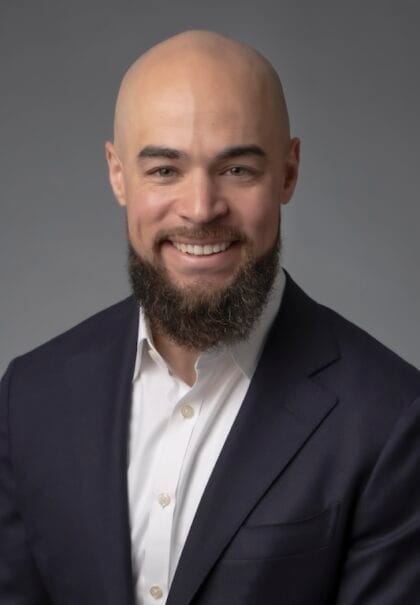
Prior to joining Purpose Built, Ben Lewis studied leadership and comprehensive community development at Harvard University. Before that, he led a high school at Strive Preparatory Schools in Denver, CO, elevating the school by two tiers on the Colorado state assessment. He also served as an assistant principal at KIPP and Northeast High School in Philadelphia, where he launched a writing program, coordinated testing, and led a school culture plan that increased on-time student attendance by 60%. Ben began his career as a high school humanities teacher at Freire Charter School, where he achieved a 92% yearly college acceptance rate as the senior team lead, authored a social sciences curriculum, and coached the varsity track and field team.
Ben’s accolades include the Penn Club of Philadelphia Social Impact Award, Philadelphia regional representative for the Sue Lehmann Award for Teaching Excellence, Harvard Graduate School of Education Entrepreneurship Award, and The Harvard Krinsky Entrepreneurship and Innovation Award. He also actively participates in advisory boards like Partners in Democracy and is an Aspen Pahara Fellow.
Ben earned his doctorate in educational leadership from Harvard University. He also holds a Master of Science in Education and a Bachelor of Arts in Urban Studies and Africana Studies, both degrees from the University of Pennsylvania.
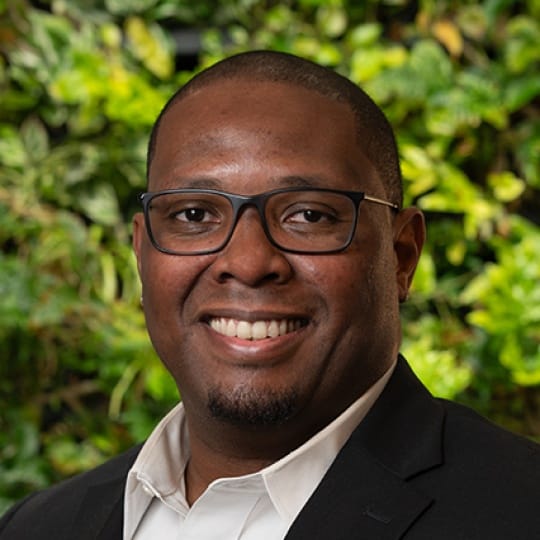
Rob Watson is the inaugural executive director of The EdRedesign Lab, lecturer on education at the Harvard Graduate School of Education (HGSE), faculty co-chair of the HGSE Master's Concentration, Cross-Sector Collaboration: Creating Thriving Places for Children and Families, and faculty affiliate of the Bloomberg Center for Cities at Harvard University.
His work has focused on themes of civic engagement, community development, and educational equity in the U.S., Latin America, and Africa. Prior to joining EdRedesign, Rob served as a consultant and advisor to organizations that include the World Bank, the Inter-American Development Bank, Harvard College, Tufts University, The Social Impact Studio, FUSE Corps, The Foundation for Louisiana, The Institute of Politics at Harvard Kennedy School, The Obama Foundation, and Harlem Children’s Zone.
A former Peace Corps volunteer and winner of the Peace Corps’ 2023 Franklin H. Williams Award, Rob has co-founded five civil society organizations in Paraguay, including Teach for Paraguay, a member of the global Teach For All Network and the Paraguayan Government's first national youth service program. Additionally, he partnered with the mayor, superintendent of schools, and community stakeholders from his hometown of Poughkeepsie, New York to launch the Poughkeepsie Children's Cabinet, a collective impact organization that convenes leaders across sectors to develop a citywide cradle-to-career agenda for children, youth, and families. Rob is also a co-founder of the Poughkeepsie Service Accelerator (PSA), a place-based service year collaborative that aims to attract and retain local talent to pursue social impact careers in the Mid-Hudson Valley region of New York State.
In January 2024, Rob was selected as a Presidential Leadership Scholar. Rob is a member of the Board of Directors of the Children's Funding Project, former World Economic Forum Global Shaper, and former Bill and Melinda Gates Foundation Millennium Scholar. In January 2025, Rob joined the StriveTogether Board of Directors. He holds a B.A. from Harvard College, an Ed.M. in Education Policy and Management from the Harvard Graduate School of Education, and a Mid-career Master's in Public Administration (MPA) from Harvard Kennedy School.
Shawn Duncan
Well, Rob, Ben, thank you guys so much for making time for this conversation. I'm honored just to sit with you and learn from you today.
Rob Watson
Thank you so much, Shawn, for having us.
Ben Lewis
Yeah, happy to be here.
Shawn Duncan
So this is a podcast largely about the way people are shaping their places, but I want to start with: what is a place that has shaped you and your life in some way? Rob, let's start with you.
Rob Watson
Sure. I'm from the city of Poughkeepsie, New York — a small city in the Mid-Hudson Valley, about 90 minutes north of New York City on the last stop on the commuter rail from Harlem 125th Street. I grew up in the north side neighborhood of Poughkeepsie. And I think it's really the tale of two cities, like everybody's town.
On one hand, a low-income Black male from a low-income household like me, who grew up in public housing, goes on to earn about $14,000 in adulthood and has about a 50% chance of being incarcerated at some point in their life. And in that same neighborhood, people live to be about 73 years old — compared to about 85 or 90 years old in nearby census tracts, even in a small city of 30,000. That's the tragedy of the place I'm from.
But I was lucky. I was raised by a village of parents, educators, aunties and uncles who really taught me that my purpose was my community's purpose, and that our aspirations and destinies were intertwined. I grew up in a place that has tremendous assets — the Mid-Hudson Valley is a beautiful part of the country. I received a lot of support from my community on my cradle-to-career journey. So it's the story of a place that had a hard time, but also a place where a lot of people rallied behind their kids. It's a place I'm still actively involved with to this day.
Shawn Duncan
Thank you for sharing that. That's beautiful. Ben, how about for you — what's a place that's left a mark on you?
Ben Lewis
I'm from Bear, Delaware — a small suburb, maybe 25 minutes south of Wilmington, right outside of Newark, Delaware, where the University of Delaware is. It's the kind of suburb that was built for commuters, right off I-95. Very easy access to Philadelphia, D.C., Baltimore. And if you go to Bear today, you're going to see neighborhoods where most of the houses look the same, a lot of strip malls — a very typical East Coast suburb.
What's really cool about Bear is that it's still racially diverse, and it was racially diverse when I was growing up. About 30% Black, 30% white, 30% Hispanic. And that just kind of happened naturally, whereas in many parts of the country, the racial dynamics of a neighborhood didn't happen naturally — there was some policy that led to it.
For me, as a mixed-race kid growing up, it was really affirming because the spaces I was in with my family looked similar to the spaces in my neighborhood. It also really sharpened my lens on race. I always noticed race in any situation I was in. And as I grew and got into school and work, it was so obviously clear that there are disparities based on race — and I just couldn't un-see them. That really was the motivation for the career I got into, where I became an educator, a teacher, a principal, and then ultimately getting into this work.
Shawn Duncan
You guys are major leaders in this whole place-based field. I was doing some research recently — I got onto the Google Ngram search, which shows how many times a word has been used in any digitized text Google can access. I decided to put "place-based" in there. And from the year 2000 to 2022, usage has increased 543%. So the idea of thinking about social inequities and social impact through the lens of places and neighborhoods is gaining a lot of momentum across a lot of different sectors.
But it also seems like it's gaining a lot of ambiguity — it means something different to all the different people who might be using it. When you think about place-based work, what is that actually supposed to mean?
Ben Lewis
I would describe place-based as a way to describe a program, a support, or an intervention that happens in a particular place. One helpful way to understand that is to think about the history of social services in the United States.
Prior to World War II, the administration of social services was mostly in the hands of either churches or families. Then you have the New Deal, which builds out a social safety net that includes unemployment insurance and social security. Then the War on Poverty, which adds Medicare, Medicaid, and other direct investments. These kinds of investments go directly to individuals or families — the strategy being that if you provide folks with the fundamental necessities of life, that will allow them to be more successful.
The difference with a place-based approach is that a place-based intervention goes to a place instead of to individuals. For example, a direct service approach to housing would be housing vouchers that help make housing more affordable for families. A place-based approach would be increasing the housing supply at all income levels in a particular place. Place-based impacts the place; direct service goes to the individual or family.
Rob Watson
Yeah, Ben and I would both joke that there's a lot of jargon in any field, and this is no exception. The layperson might say, isn't everything a place? Mars is a place. Brazil is a place. But the way I often explain it is that place-based policies or approaches take some sort of target geography — it could be a neighborhood, a city, or a region — and you're trying to deploy a set of policies that can improve outcomes at scale for people living in that geography.
You take a place-based approach because that's often where disadvantage lives most. You're trying to address the unique characteristics of that geography and improve outcomes for people across it.
Shawn Duncan
I was trying to draw a distinction this week with someone between being "based in a place" versus being "place-based." Because there are philanthropies and nonprofits that say, we are limiting our services only to people or organizations inside this specific geographic boundary — and some people call that place-based. But to me, that feels more like it's based in a place. Is that distinction even helpful?
Rob Watson
I think what you're getting at, Shawn, is that concentrating services in a target geography is a good thing — but to really complement that, you also have to actually shift the conditions of that place. In my north side of Poughkeepsie, you might create much better early childhood programs, much better out-of-school time, even better schools. But kids then might do well, and yet that neighborhood still might have dynamics that make you want to leave and not come back. You did the service delivery part right, but you didn't necessarily create a neighborhood of choice.
Ben Lewis
The Harlem Children's Zone has this helpful concept they call a neighborhood tipping point. Their model involves programming for youth along every stage of the cradle-to-career spectrum — so whether you are a two-year-old or getting ready to go to college, there is high-quality youth programming for you in a particular neighborhood. And the idea is that you saturate a neighborhood with so much programming, reach so many kids and families, that it just becomes the norm. And once you get to that tipping point, you start changing the fundamental conditions of that neighborhood.
So to me, the differentiator is the goal: are we trying to serve folks in this particular place in order to improve the overall condition of the place? That would be what makes it a place-based approach.
Shawn Duncan
I remember my early days in the nonprofit space, 20 years ago — a lot of the success stories were programs that got the kid out of the neighborhood. And coming to this place-based work, I realized: maybe what we need to be working on is the conditions we're trying to get people out of. So why isn't it enough to just do more programs, more resources, more service delivery? Why do we need to think about places themselves as a mechanism for social change?
Ben Lewis
I think about it in terms of justice. If you were to take a map of the United States and look at where upward mobility happens — and where it doesn't — in the places where it doesn't happen, there was some kind of policy or practice that impacted that particular place, which then impacted the people who live there.
One example: the Lower Ninth Ward in New Orleans. If you go there, you have to cross a bridge to get there from the rest of the city. That's because the Industrial Canal separates that neighborhood from the rest of New Orleans. The canal was built to create a faster trade route between the Gulf of Mexico and the Mississippi River. But in order to build it, they put it right through that part of the city, creating a physical moat and barrier. The outcome was that investments didn't make their way down there — including a strong levee system. We all know what happened during Hurricane Katrina.
If you trace the chain of actions — the policy and practice that happened, which impacted the place, which then impacted the people who lived there — there's a story like that for every place across the U.S. that doesn't have upward mobility. So the response is the opposite of that: what is the policy and practice that's going to influence the place in a positive way, that's going to influence the people who live there?
Rob Watson
All of the challenges and opportunities of this country play out at a hyper-local level. Raj Chetty's research has shown that within a half-mile radius of where you grow up is one of the leading determinants of who you get to be later in life. So if we want to reclaim the American dream, we have to reckon with the neighborhood. We have to reckon with very hyper-local considerations.
And it's also a question of pride and identity. Everyone has some connection — good, bad, or ugly — to the place they come from. When someone had a good experience, it's often: my neighborhood had this, or the parks were this, or my school system was that, or my faith community was there. The power of place — and the tragedy of place — both play out at the hyper-local level.
Shawn Duncan
Rob, you mentioned Raj Chetty. As the current place-based movement continues to grow, where did we begin to see neighborhoods as profound determinants of life outcomes?
Rob Watson
I mean, the idea of being hyper-local goes back to when we were all in Africa — I don't want to act like this is a 21st-century invention. There have been people like William Julius Wilson in sociology and others who've spoken to it going back some time.
But Raj Chetty and his group, Opportunity Insights at Harvard, have been able to show things that I think people have felt in their own experiences for a long time. One was this idea of the declining American dream: a kid born after World War II had about a 90% chance of earning more than their parents in adulthood. Someone born in the 1980s has a coin flip — 50% chance. And some of the most recent data shows it's even 48% now. For the first time in the modern era, a kid has a less than 50% chance of earning more than their parents in adulthood.
Then his team was able to create a map of the U.S. showing where economic mobility is still alive and well — and where it isn't. And one of the big innovations that motivates the place-based movement is that the same variability you might see between Minnesota and parts of Alabama, you can see within a single city. In New York, you see different outcomes in the South Bronx versus the Upper East Side. In my hometown of Poughkeepsie, you see different outcomes on the South side versus the North side. It motivates us: neighborhood is something we have to reckon with if we want to create possibility for all.
Ben Lewis
And as Rob said, it's as early as our earliest ancestors. People want to live in a good place — the concept is old. What's new is more research to back it up and larger-scale efforts to make it happen. But we're continuing a long history of trying to improve places and doing so in service of the vision of the residents who live there.
Shawn Duncan
For folks who are early in their journey with place-based work, what are some of the fundamental domains of work that seem to be crucial — the common areas of focus when you're partnering with neighbors and neighborhoods for change?
Ben Lewis
A big part of what Rob and I focus on is children and families — specifically, what are the conditions in a neighborhood that really impact children? You see a lot of national organizations — Harlem Children's Zone, StriveTogether, Purpose Built Communities, Partners for Rural Impact — where child well-being is a driving force.
Rob Watson
Our part of place-based work is definitely focused on improving outcomes for young people and families along a developmental continuum — cradle to career. But a few things I'd put on the table regardless of whether your place-based strategy is child-centered, health-focused, about economic development, or all of the above:
First, these efforts are cross-sector. It's about bringing leaders together across sectors, because no one institution or sector alone can get it done. You need to create value propositions across sectors to move the work forward.
Second, there's typically some set of data being used to make decisions in that geography — to inform how people are living today and set an aspiration for how we want them to live tomorrow.
And critically, there's usually some sort of intermediary organization — a backbone organization, a community quarterback — that wakes up every day thinking about how the entire ecosystem is operating. They're the air traffic controller for the larger set of actors, seeing what different service delivery mechanisms are in place, understanding the politics of a geography, and aligning actors toward a shared vision. They're also thinking about how to pay for the work — how to stack public and private financing to support the different aspirations of a geography.
Ben Lewis
One way to think about the actors is in terms of concentric circles. The middle circle is the intermediary — the community quarterback — that wakes up every day, works in, and serves a particular place. Then the next circle out is organizations that would otherwise work in silos: your YMCA, your school system, CDFIs, hospitals. They each have a particular mission in a particular domain of life, and it's the intermediary's responsibility to align them toward what the place needs.
Then you have another circle — the enablers: universities, funders, policymakers, federal programs like Promise Neighborhoods or Choice Neighborhoods, fellowships for place-based leaders. These are the enabling things that make the whole system work, all in service of what the intermediary is doing at the local level.
Shawn Duncan
Why, by necessity, do residents have to remain at the center of this work?
Ben Lewis
Different policies and programs are going to hit different places differently — that's just the reality. One example: U.S. public school funding. Say there's a federal program that provides funding to schools on an equal basis. Some schools will still end up with more than others because some communities can supplement that funding with local donations, depending on the wealth of parents in that community. The goal might be to level the playing field, but you're going to have differences depending on local dynamics. That's a reason why interventions need to be specific to the place.
And different groups of people have different goals and different visions for their community. What you risk when you don't keep residents at the center is putting in place something that doesn't actually meet the goals of residents — or is even counter to them. Think about some of the worst examples of urban renewal or eminent domain: the intention might have been to improve infrastructure, but in the process, the local economy and social capital were disregarded, along with what people actually wanted. In those cases, you do more harm than good. Centering residents is the corrective.
Rob Watson
There's a real-world example I use often in a course Ben and I used to teach together. In Dallas County, only about 40% of eligible families were accessing WIC — the federal program supporting expecting mothers and families with infants and toddlers. It's a critical safety net program shown to get families and kids off to a good start. But money was being left on the table.
The question is why. Our friend Alan Cohen at the Child Poverty Action Lab partnered with IDEO and others to do a human-centered design effort. They found a number of issues: transportation challenges to get to the social service agency, what it actually feels like to be in that office, how you're treated based on your economic background, how long the process takes when you also have to feed your family and get your kids to school and work a job, and how clearly WIC-eligible products are labeled at the grocery store.
And what Alan did was what he calls the radical act of having people talk to each other. He held a workshop called "Moms and Bureaucrats" — WIC-eligible moms who had experienced the program sat with the heads of WIC for Dallas County. They got to voice what it's actually like. And together, they reimagined WIC and dramatically increased WIC enrollment rates in Dallas County. It's an example of well-intentioned policy that wasn't executed with any sort of resident-centered approach — so it left money on the table, and that left a generation of children without access to the support they needed.
Shawn Duncan
Ben, belonging has become a meaningful concept in the way Purpose Built Communities thinks about the neighborhoods you're working in. How does centering residents connect with this need for belonging?
Ben Lewis
A lot of it is getting back to our roots as people. Connecting with others in community is part of being human. And there's a really natural way that that connection happens — it's with your neighbor. The person right next to you, the one you run into at the bus stop with your kids, or pass on the way to the store, or see at the park. There's something in that proximity.
And there's a lot to be said for the collective action and community building that comes from getting together with people and accomplishing something — whether that's on a sports team, a team at work, or a group of neighbors. Something we've started doing more in partnership with our network members at Purpose Built Communities is bringing folks together around a particular project or challenge, facilitating an opportunity to make an improvement, and then experiencing the feeling of connection and community that comes from that. That's nothing small.
Shawn Duncan
Yeah. And I think it's like — the way you go about the work has to be deeply rooted in people forming community, but that's also the highest outcome. At the end of the day, if people are seen and known and loved and cared for, that's the highest good. Part of why these broken systems are so problematic isn't just the economic dimension — it's that these systems are weakening our ability to be people in community with each other.
Shawn Duncan
How do we know that we're doing place-based work well — that we're really putting residents at the center in ways that are healthy?
Rob Watson
There are ways to measure quality of life for all people at the local level — economic mobility, life expectancy, social connectedness, civic engagement rates. We have quite a few ways to talk about quality of life. But we also have a lot of work to do to capture the dynamism of a place in other ways.
From a framework perspective, my colleague Peter Levine at Tufts — an expert on democracy and civic life — says there are three things you need for a robust civic life. And I think this is especially true at the local level.
First, you need places for people to deliberate and learn together. Democracy requires understanding people different from us, reckoning with things that didn't happen to us, and doing that honestly and well. That deliberation, when it's real, can unlock something special.
Second, you have to do things together. You have to create something of value — whether it's building a park, using participatory budgeting to imagine the top three neighborhood priorities, or creating a new early learning center in a childcare desert. Public work matters.
And third, all of that should aggregate into a permanent infrastructure of enduring civic and trusting relationships. Neighborhoods that have that relational, lifelong character to them — we know that kids do better in school, that people access better housing choices, that they unlock new possibilities on the challenges they've faced. The places I admire most in this movement have real civic spaces to deliberate, real civic spaces to act, and real civic spaces to maintain and build relationships over time.
Ben Lewis
I'd add resident and community ownership. When it comes to centering residents, there's a spectrum. On the low end, you're a developer or city department that has to check the box of a community meeting — four people show up, you put out a press release saying you did resident engagement. That's the lowest end.
On the highest end, residents are at the helm. They actually own the process and the outcomes. That can be tangible — literal ownership over land and the things on it. But it's also more intangible: the social infrastructure, the ways of connection. Do the residents actually own that in this place? To me, the proxy for success is: do they own this place, the process, and the outcomes it produces?
Rob Watson
And the Purpose Built team taught me the power of that. I used to think my North Star was: if I could just get these kids a really good education and some good economic opportunities, we might have figured it out. That's part of it — a critical part. But if you don't own anything, does that change who gets to decide? In the upper middle class, there are intergenerational wealth transfers, there's ownership, there's decision-making power. Who gets to decide what type of business will be in my neighborhood? Whether we have access to high-quality grocery stores?
I've been really inspired by folks in the Purpose Built Communities network — people like Mashanda Taylor in Birmingham — who have shown me what it looks like when residents own housing, when they've stood up businesses, when they've created grocery stores and places for cultural activity. That's a serious neighborhood. That's a place where the people who live there are setting the vision.
Shawn Duncan
Yeah. And even if you're an outside force who intends good, you're still an outside force. The measure of doing it well is this ownership piece. I remember Carol at Purpose Built saying she hated the term "community engagement" — because so much of what passes for engagement is just that lower end of the spectrum you described, Ben. Someone with a clipboard, checking a box, and moving forward with plans.
But what you're both describing is something different: ownership, belonging, trust, connectivity, civic power. That's the beautiful stuff. I'm so grateful that the two of you are leaders in this field — constantly convening people, creating thought leadership, training opportunities, resourcing folks. Thank you so much for this conversation today. I really appreciate everything you're doing.
Ben Lewis
Thanks for convening us, Shawn. It was a great conversation. I enjoyed it.
Rob Watson
Thanks, Shawn. Really appreciate it.