Franklin Park: How a Cross-Sector Partnership is Prioritizing Neighborhood-Level Belonging
In our previous episode, we discussed the place-based social impact movement and the meaningful results it is producing in neighborhoods around the country. We focused on the necessity for place-based efforts to be people-centered. This week, we offer a case study illustrating this approach. For the last few years, two of our team members, Producer David Park and Host Shawn Duncan, have had the joy of participating in some amazing work happening in the Franklin Park neighborhood of Allentown, PA.
This week, Shawn speaks with two of the leaders shaping this phenomenal work. Dr. Samantha Shaak is the Executive Director of the Leonard Parker Pool Institute for Health, the organization serving as convener and backbone for this place-based partnership. Darian Colbert is the Executive Director of Cohesion Network, the local nonprofit that is the driving force behind the neighborhood engagement, connection, and organizing work. Listen in on this conversation about how a large healthcare system chose a place-based approach and how the partnership is catalyzing neighborhood-level belonging and shared action.
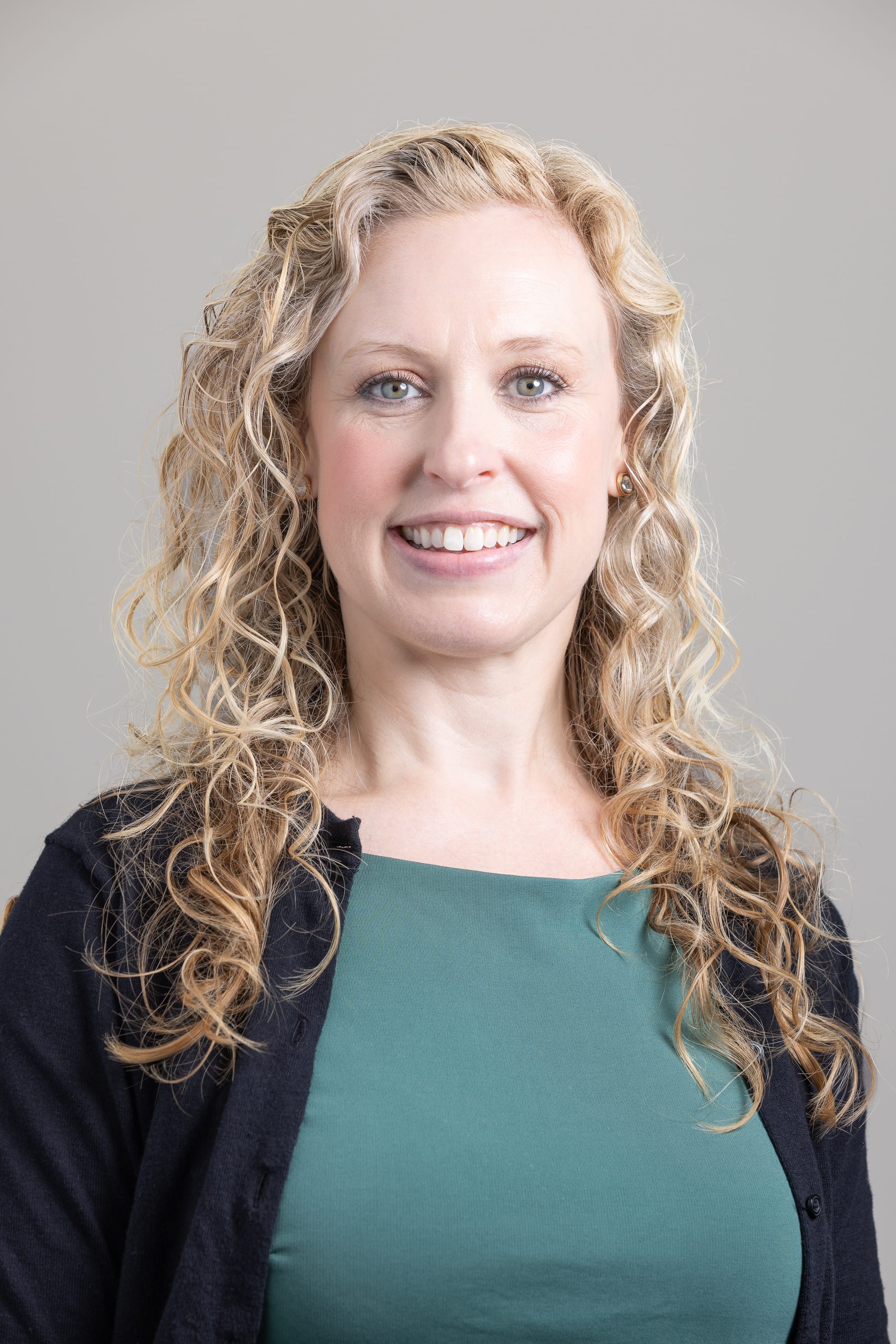
Samantha A. Shaak, PhD, is the Executive Director of The Leonard Parker Pool Institute for Health. She has been with LVHN since 2015. Prior to transitioning to the Institute in 2021, she served as a Senior Research and Evaluation Scientist and the Manager of Health Systems Research & Evaluation in the Department of Community Health.
Samantha is an applied, translational researcher with interest and experience in initiatives that use cross-sector approaches to build community, using data to inform and mobilize community change. Her work focuses on evaluations of prevention and intervention efforts that promote family and community resilience and on community-level systems changes to improve quality of life and health.
Shaak received her bachelor of arts degree in psychology from Georgetown University in 2008 and her doctorate in human development and family studies from the University of Connecticut in 2014. Samantha is a Pool Fellow for Health Alumna, participating in both 2016 and 2021.
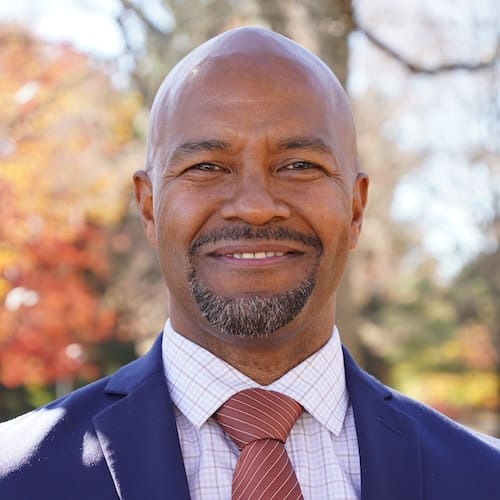
Darian is the founder and Executive Director of Cohesion. He has served in leadership positions in urban development work since 1999. Through these roles, he has developed partnerships with leaders in universities, the public school system, and the juvenile justice system. He has traveled the world in support of indigenous leaders working in community development in Guatemala, Haiti, the Dominican Republic, Uganda, Zambia, and South Africa.
As a passionate motivational speaker, Darian inspires individuals and communities to take action toward sustainable change. His speeches focus on leadership, resilience, and the power of collective impact, drawing from his extensive experience in community development.
In recognition of his dedication to community transformation, Darian was honored as a recipient of the 2025 Good Neighbor Award from PBS39 in the Lehigh Valley, celebrating his impact in empowering marginalized communities and fostering local leadership.
EPISODE TRANSCRIPT
Shawn Duncan
I want to start with this question: this podcast is a lot about the way people are changing their places, so I actually want to start with how has a place changed you? It can be a current place or a place you lived when you were really little — tell me about a place that shaped you.
Darian Colbert
The First and Sixth Ward neighborhoods really transformed me in so many different ways. Growing up in the late ‘70s and all throughout the ‘80s, it was deeply relational. We had Syrian culture, Black culture, Hispanic culture — Cubans, Puerto Ricans, Dominicans represented in our neighborhood. We had Russians, we had Haitians. And so it was a powerful neighborhood to grow up in. I experienced that culture through food, dancing, and everything else. It really transformed me and helped me appreciate diversity, appreciate people’s culture. I’ve grown not only to respect it, but to love other cultures and how they interact — especially in a neighborhood.
The First and Sixth Ward, man. I could talk about food. I can name dishes from different cultures because I’m a foodie. And it was safe. Even when I felt unsafe somewhere else, I remember crossing a Union Boulevard bridge, running — and as soon as I got to Front Street, I took a deep breath and said, “Oh, I’m home.” That’s the Sixth Ward. You just — I felt very safe in my neighborhood.
Shawn Duncan
Having been to some of your community meetings, I can feel your neighborhood in the way that you lead those meetings. Everything you just described — that’s the vibe of a Darian-led community meeting. Sam, how about you? What’s a place that shaped you?
Samantha Shaak
Every place you live shapes you in some way, so it’s hard to pick just one. I grew up on Long Island, outside of New York City — much more urban, very busy, a lot of density. Then I was in D.C., then a rural area in Connecticut, and now in the Lehigh Valley. Each one has shaped me in a different way. But I think the Lehigh Valley has taught me to really learn what’s around you in a new community when you move to it — how do you actually become part of it? The Lehigh Valley has so many good festivals, restaurants, things to do. Here, I really learned how to become part of a new community in a way I probably hadn’t in any of the other places I’d lived.
Shawn Duncan
Something you guys say a lot in Allentown is about trying to invite people to move from being residents to neighbors. And it sounds like the journey you’re describing is exactly that — it’s not just going to sleep at an address, but actually saying, I’m in this and it’s in me.
THE POOL INSTITUTE’S JOURNEY TO PLACE-BASED WORK
Shawn Duncan
Sam, I’m curious about the journey of the Pool Institute becoming more focused on neighborhoods and places — where that historically wasn’t the focus. Tell us a little about that journey.
Samantha Shaak
The Lehigh Valley Pool Institute for Health was formed in 2020 and really got started in 2021. It was born out of a previous philanthropic fund that was due to be shut down. The remaining funds were brought into the health system — not the usual thing you hear from a health system — and we were set up as a subsidiary. Our goal is the same as it was under the philanthropic trust: to improve the health of the region outside of the hospital walls. But now we had a chance to do that differently, because we were no longer a grant maker. We were going to be doing the work alongside other partners.
We had to think: how do we go about this? So easily we could stretch across a large geographic footprint and try to do a lot — but not deeply. We knew that wasn’t really going to change health outcomes in the long term. So we spent a lot of time, even before the Institute was created, looking at other places across the country. Who was really able to get transformational change, and how? That led us down a path of looking at place-based approaches — StriveTogether, Purpose Built Communities, and many other models. But the theme is the same: neighborhood matters, and everything that happens within a neighborhood really influences your health over time.
If we want to change health outcomes, we have to recognize that the healthcare system is not the only one responsible for health. Most of where health happens is actually outside of the healthcare system. So taking a place-based approach and matching that with our health improvement focus, we started to think: instead of going across a big geographic footprint, what if we drill down to a neighborhood and think about all the things that impact health there — housing, education, food access, sense of connection and belonging? Can we do all of that on a smaller geographic footprint and really see long-term change?
We knew from the beginning we weren’t going to do this in three years and say we did it. This is a long-term journey.
Shawn Duncan
Darian, your own experience growing up in the First and Sixth Ward clearly shaped your sense of what neighborhood life means. But as you were getting Cohesion Network going, were there other influences that caused you to say: I don’t want to just run programs and services, I want to think about the communities in which people are living?
Darian Colbert
Absolutely. Weed and Seed was a national program that started around 2000–2001. Someone put a flyer on our door that said, “If you want to improve your neighborhood, come out to a meeting.” My wife Yolanda — the most introverted person on the planet — went to that meeting while I was working in Bridgewater, New Jersey. She loved what she heard. That model trained us in community organizing.
Through that work, around 2004 or 2005, Yolanda started meeting with teenagers from Allen and Dieruff High Schools and some middle schools. She asked them: what do you want for your community? They said a hip-hop dance program, spoken word, and graffiti art. So we started Xscape Dance — and that thing blew up. It became a program that went international. It lasted. And the reason I’m sharing that is because if you ask the people in the community what they want and you provide it — it will last. Because they asked for it.
I got addicted to community organizing then, because I saw it had an impact. I was working for another nonprofit — a church — and we did outreach really well in ’97, ’98, ’99. But then they moved away from outreach. And once they did, I just felt like that’s part of me. That’s when Weed and Seed came along, a year and a half later. And I was like, yes — this is it. I can build a bridge with this work. That’s why Weed and Seed had such a tremendous impact on how I engage neighborhoods.
Shawn Duncan
Sam, Pool Institute forms, you’re thinking about holistic, place-based, deep-dive work. You identify Franklin Park in Allentown — and you knew from the beginning the ground game had to come first. The community engagement, the human side, the relational side. Where did that come from? Because even when I engage people from health systems or education systems or government, even if they’re using the language of place-based, it doesn’t normally come from a place of: we have to do this alongside people. How was that built into you as you began to lead this work?
Samantha Shaak
Frustration of doing it wrong for so many years. Most larger systems don’t really know how to be in genuine relationship with the people they’re trying to serve. It’s what they aim for, what they’re striving for. But it ends up feeling transactional more often than not, because it’s not their core mission. Their sole mission — if you take health care — is to provide quality health care. The engagement piece is extra, and they can’t do it continuously.
Prior to the Institute, I was in community health for many years. And the constant story you hear is: it was really great, and then it went away. Funding went away, someone changed. Even though we showed we had impact, we couldn’t sustain it. People started asking, “What’s your sustainability plan?” But people are the sustainability plan. That’s really the only sustainability plan.
So if we were going to do long-term work, we knew it couldn’t just be the health care system going out and telling people what they needed to do — or building a bunch of programs that could stop at any point. It was about building an infrastructure where a health care system, an education system, a city government can come into a people-centered ecosystem and engage at whatever level they need to — and go back to their core mission. We kept doing iterations of “community-based” work and getting really good relationships going, doing some good work — and then we couldn’t figure out how to keep it going. We’d stop, start over, promise we were doing it differently, and get the same result.
As we thought about what the Institute should be doing, we recognized we’re in a large system — we’re not the boots-on-the-ground people. But that boots-on-the-ground presence was going to be essential to developing the relational approach that needed to underpin everything.
Shawn Duncan
And so you decided Cohesion Network — Darian and Yolanda — were going to be the tip of the spear. What was it about Cohesion that made you feel like they were the right partner?
Samantha Shaak
I can’t take full credit for that connection — I’m incredibly grateful to the people who came before me who made it happen. Some of our initial team were members from the former Pool Trust, and they had relationships throughout the valley. One partner recommended Cohesion Network, and that’s how the connection was first made.
Cohesion had been doing this work in the First and Sixth Ward. So it really became a question of: can you do what you’re doing there and bring it to a new neighborhood? It was our chance to say: can we use someone who’s already been working at this for a long time, who has these skills, and see if they can stand something like this up in a new neighborhood?
Shawn Duncan
Darian, why did you say yes?
Darian Colbert
First, the foundation for effective neighborhood engagement is rooted in trusted relationships. When Jenna Azar engaged us, she was from the Weed and Seed model — we were trained together. She understood how we roll: this is not something you can rush. And they didn’t just call and say, “Hey, we want you.” They courted us for months. Ron Dendes asked really, really good questions. He had it in him — like he had gone through Weed and Seed himself. When we shared things, he could finish sentences because he knew what effective neighborhood engagement looks like.
And really effective neighborhood engagement isn’t vainglorious. People don’t want to support it — there’s no ribbon cutting, no big announcement. As my friend David Park says, it moves in inches and not miles. It’s slow work, but it’s great work.
We were values aligned. I felt like we had a significant opportunity to do it the right way — not the fast way — with Pool Institute stepping in as the quarterback. So I said yes. But Yolanda and I talked through it. She said: “Darian, you walked every inch of the First and Sixth Ward. You knew people there. You don’t know people in Franklin Park. You’re going to have to walk every inch again.” And she was right. And the first two or three years — we’re moving on four years now — there were times it felt like we’d bitten off more than we could chew. And then you see the beauty of why you do what you do: the relationships, the progress, the tears, the laughter. We had the opportunity to do it the right way, not the fast way.
THE EARLY DAYS IN FRANKLIN PARK
Shawn Duncan
Darian, the red carpet wasn’t exactly rolled out for you in Franklin Park when you first arrived. What were those early days like?
Darian Colbert
We needed every bit of support from Ron and Jenna as we navigated the first couple of months. True to my word, I walked every block of that neighborhood — passed out over 500 flyers, really over 1,500 in the first two or three months. People would see me and think, “There’s that guy again.” I would describe it as skepticism and side-eye. People were very skeptical of us — rightfully so. They had us right here — at arm’s length. And we were kept there for a while.
We had to prove we were committed to Franklin Park, and we had to be consistent. I don’t knock them for that. I’m grateful they did it. I remember winning Blake over. I remember winning Sherry over. We won Sherry over in Atlanta, because you can’t fake how you share — it’s in us. We went to Atlanta kind of heading in the same direction, separately — and we came back like this. And it’s been different ever since.
We moved from colleagues to friends. We talk about moving residents to neighbors — but for us in the partnership, the goal was to move from colleagues to friends. We couldn’t take things personally, couldn’t make assumptions. We had to show up as our most genuine selves and communicate. We’ve had many really good, hard conversations — with each other and with other folks — about what we believe about engagement. But transition is an antidote to conflict. We talk to each other, not about one another.
Samantha Shaak
Part of that is just giving people space to get to know one another. Everyone wants to say they’re collaborating — and we try our best to. But in doing so, we tend to jump into the work part of it. What Darian just talked about has nothing to do with any of that. It’s about getting to know people and figuring out if your values are aligned, only by understanding the approach someone’s taking toward something.
There’s this concept of slow down to go fast: if we can create space on the front end to build initial trust, to really get to know one another — then the ability to collaborate, to work through hard things, becomes infinitely deeper. Once you do that stuff on the front end, which takes time, it really enables meaningful ways of working together that couldn’t have happened otherwise.
FIELD TRIPS AND CROSS-SECTOR LEARNING
Shawn Duncan
You’ve put multiple people from multiple organizations on an airplane, gotten them to Atlanta, put them in hotel rooms — and just let this magic of slowed-down time together happen. You’re spending real dollars to invest in moving leaders from colleagues to friends. Is that an easy sell internally?
Samantha Shaak
It’s been core to how Pool Trust operated for years before the Institute started, and how the Institute has been from the beginning. We learn from others. We don’t have all the answers. And there are people around us who have figured out pieces of this way quicker than we have. So there has always been a value of: go and see, go and learn, and bring it back to the Lehigh Valley.
If other people can figure it out in other places, we can too. But we don’t need to do it from scratch, and we don’t need to pretend there aren’t other people we can learn from and adapt. So it’s core to the mission. We recently went to visit a Purpose Built Community in Delaware, and the first thing they said was: wow, this is one of the most diverse groups — in terms of different organizations — that we’ve brought with us. That’s where the magic is. Lots of different voices, lots of different opinions. The thing we always say is: everyone brings something to the table. It takes the pressure off any one group feeling like they need to solve all the problems.
Darian Colbert
All of us — neighbors, residents, systems, organizations — we all have a piece of the answer. That means our creative solutions only come from our togetherness. Collaboration is the only way forward.
PASTOR MARITZA AND THE SACRED SPACE
Shawn Duncan
I’m thinking about Pastor Maritza — one of the matriarchs of Franklin Park — and this meaningful moment of what was almost a leadership transition of sorts. Tell us about that.
Darian Colbert
Jenna grew up in Franklin Park, right on 15th Street. She was very aware of Pastor Maritza. And so she sat us down — Maritza had a tablecloth of lemons, lemonade, and lemon cookies — and we had a conversation.
I’ve recently gotten new language to describe who Pastor Maritza is. You hear people talk about root causes — well, she is a root catalyst. When I sat there and heard her heart for that neighborhood, she wanted an afterschool program for the kids, because before COVID they had had it. She said: “I want this to happen. I’m older, I can’t do it anymore.” And she rattled off everything she desired to see. Most of them — I believe all of them — we’ve addressed.
Almost four years later, those things are happening. She’s a root catalyst — she planted that great seed of neighborhood engagement for over 20 years. Then after COVID she said, “It’s time to pass the torch.” And she gave us the opportunity to work together — but she watched to see if we were going to do it the right way.
And in a meeting later with you and David — when you had been sharing, doing one of your Shawn Duncan moments that really landed the plane for what we all believe and value — when you got done, she said: “This is a sacred space.”
Think about where you feel the most safe. That’s a sacred space. And in that room full of different people from different sectors and organizations, she called it sacred. That’s what this work does.
Samantha Shaak
The thing you talked about that night was the infinite game — the idea that we are often in competition with one another as though there are limited resources to go around. But this idea that we can play a different kind of game, not acting as though we are fighting over limited resources — that was a transformational metaphor for us. It’s not about one organization winning and the rest not. It’s about all of us. And in order to really serve the community we want to serve, we need to operate from that infinite game mentality.
CULTIVATING BELONGING, NOT JUST SOLVING PROBLEMS
Shawn Duncan
Darian, for you, the people being together is one of the reasons you’re doing it. The act of being together is the thing. How do you shape your community engagement so that it’s not just organizing to fix something, but actually cultivating belonging and trust and relationship?
Darian Colbert
People always trump the agenda. And it’s always rooted in people first. Before we even start community meetings, we ground ourselves in our humanity. We give folks a moment at the end of the day — six o’clock at night, many of them have kids, homes, jobs, they just came from work — to take a deep breath. And sometimes that leads us in different directions than we planned.
I remember a vivid moment where something serious had happened at a school. The mayor was there, neighbors were there, and they had a robust dialogue about a solution. The mayor showed up and listened and absorbed it. They were having this amazing conversation in a safe space, and they walked away hugging each other. It was just people first.
Our superpower is that when you show up to any event we put on, you can’t tell who’s leading it — because we do it together. The president of city council came to our last Earth Day celebration and rolled up on Yolanda and asked, “Who’s in charge?” Yolanda said: “That’s the power of what we do — you can’t tell.” No one’s saying, “Look at me, it’s me.” We own it together.
Recently we started a job readiness program — and in the second week, one of the participants said: “It’s not the curriculum. You two are the secret sauce.” And she said: “You took nine strangers who don’t know each other, and we’re friends now — and it’s only a week later.”
And ultimately what we’re doing, Shawn, is building bridges and being bridges. We ventured off into Franklin Park with the goal of building relationships and connections. But at times we also had to be a bridge. Bridges take a long time to build. But once built, people walk over, ride over, drive over. And the thing about being a person as a bridge is — you get walked over sometimes. And you have to be okay with that.
We started out building bridges together — Pool Institute, Cohesion, and then Sherry, Ripple Inc, Angela, Charlene, Danilo, Valley Wealth Alliance, Community Bike Works, Community Services for Children, Boys and Girls Club, Valley Health Partners. Now we’re all building this bridge together, each owning our own lane. And we’re building it toward systems that need to change — city government, politics, institutions. Being a bridge, and building a bridge — that’s what I’d say about this great work.
BUILDING A CULTURE OF COMMUNITY ENGAGEMENT
Shawn Duncan
Sam, as you’ve observed all of this community engagement work, how would you point to the elements or practices that keep it human — not just solving problems or running agendas, but actually building belonging and connection and trust?
Samantha Shaak
If we could bottle up Darian and Yolanda’s approach to things and have that be everywhere, I think that would be half the battle. When Darian’s welcoming and opening a meeting, it automatically changes the tone of the room. That authentic desire to connect with people is infectious.
If you go back to Darian’s earlier story about Pastor Maritza being the one who shepherded this for as many years as she did, pretty much on her own — the weight of that neighborhood was on her shoulders. If there’s nothing else we’ve done, I hope we’ve wrapped around that, so that it’s not one person’s job. We can all be more effective if we’re all doing our part to work in the same direction in the same neighborhood.
It’s about what the collective wants. And exercising that muscle over and over again, every single day — it never just gets done. You have to keep revisiting it. Every new topic that comes up, we have to practice it again. The day-to-day work of relationship building with as many people as possible will never stop. And it can’t stop, if we’re really going to create solutions that work and are sustainable.
THE BLUEPRINT AND WHAT COMES NEXT
Shawn Duncan
Sam, at some point you were saying to me and my team: we need to get really tactical. We need a blueprint here. We’ve got the right values, the right people — but there might be some gaps. Say a little about what you were noticing and what you felt was needed.
Samantha Shaak
In any community engagement initiative, you go out, gather a group of people, and get to work on an issue. But once you’ve gotten past that initial piece, you feel a plateau. We had gotten some traction, some momentum — but the question became: where do we go next? How do we continue to grow and evolve this?
That’s when we had that conversation with you all, and realized that one-to-ones were really the key to unlock. The big groups create energy, but if there’s not a web of individual relationships underneath, it doesn’t continue to grow and nurture and expand. That was the pivotal moment: we’ve got some early wins, we’ve got a space for residents to come and be heard — but what does it look like to continue to evolve it and create an infrastructure that can sustain itself long-term?
Shawn Duncan
And what became clear through the process of co-creating that blueprint together is that what you all are doing isn’t episodic community engagement. You’re not just learning about one issue or accomplishing one project. You’re building a culture of community engagement. It’s a way of being. The priority on individual relationships, small conversations, the power and agency of the neighborhood coming together — it’s now just rhythm, ritual, practice, culture.
WHAT DOES SUCCESS LOOK LIKE?
Shawn Duncan
What does success look like in all of this? Whether short-term or long-term — how do you know it’s working?
Samantha Shaak
In the shorter term: for anyone who’s worked in human services or nonprofit work, we spend a lot of time, energy, and money restarting over and over again with every new initiative or program. Success, first of all, is being able to support the glue and the structure needed to keep things going in between big grant cycles or big projects — so we don’t have to restart every time.
If you can figure out how to keep yourselves together and keep that relationship going, then being able to jump into the next project, the next thing that comes up, becomes so much easier. That’s one early sign of success — and one that’s often missing when things don’t work in other places.
Darian Colbert
Two of the most basic needs for every human being are to belong and to have significance — that’s Alfred Adler’s learning theory, and Maslow’s hierarchy speaks to similar things. Belonging and significance: being heard, being connected, feeling supported.
Carol Gonzalez was an elder in the Franklin Park community. She’d been there for over 20 years. When she slipped away to eternity, her sister reached out and said: she loved our community group so much that she wanted someone from the Franklin Park community to come speak at her funeral.
Shawn, that’s success. She didn’t ask for a specific person. She said: can we have a representative from the Franklin Park community? And the mayor showed up. Our crew from Franklin Park showed up in full force. The community showed up for an elder who had given her time and civic muscle her whole life. To be invited into that moment — to be trusted in that moment — that’s success.
Samantha Shaak
To tie it to the longer-term piece: community engagement isn’t just for community engagement’s sake. It’s all in the name of giving people greater opportunity for health and wellbeing over time. From that relational, engaged space, we can create better solutions, better programs, bring better services. But all of that is only possible if it has this relational piece underneath it.
CLOSING
Shawn Duncan
I want to say — more people need to be taking field trips to Allentown, Pennsylvania and spending time with you guys in Franklin Park and the First and Sixth Ward. To get an image of what it means to put people at the center of place-based change.
We’ve talked about the transition from residents to neighbors, from colleagues to friends, from suspicion to sacred space. And even for me — when people ask what I do for work and I say I’m going to Allentown — it feels weird to call you guys clients. It’s like I’m going to see my best friends who happen to live in Allentown. What you’ve built and created and cultivated is profoundly unique and one of the great gifts of my life. Thank you for this conversation, and thank you for being such great friends and great humans to learn from. I’m deeply grateful for you both.